
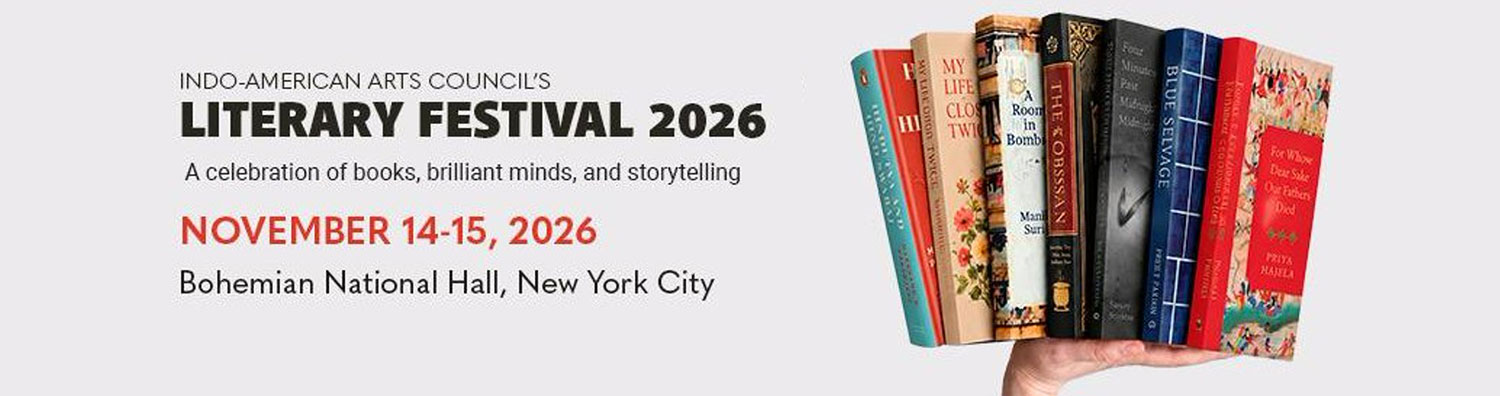
Indo-American Arts Council
Literary Festival 2026
Bohemian National Hall, 321 East 73rd Street, NY
November 2026
(All sessions are FREE and OPEN to the public. Please RSVP.)
For Parking Directions at venue, click here.
November 14-15, 11AM-6PM | Bohemian National Hall, 321 East 73rd Street, NY
All sessions are FREE to attend
This is a placeholder development site.
The content here is for review and simulation purposes only.
Stay tuned for updates!
We are delighted to have an exciting lineup that continues to be updated.
All sessions are FREE to attend and will be held at
Bohemian National Hall, 321 East 73rd Street, New York City, NY 10021
November 14-15, 10AM-6PM
SATURDAY PROGRAM
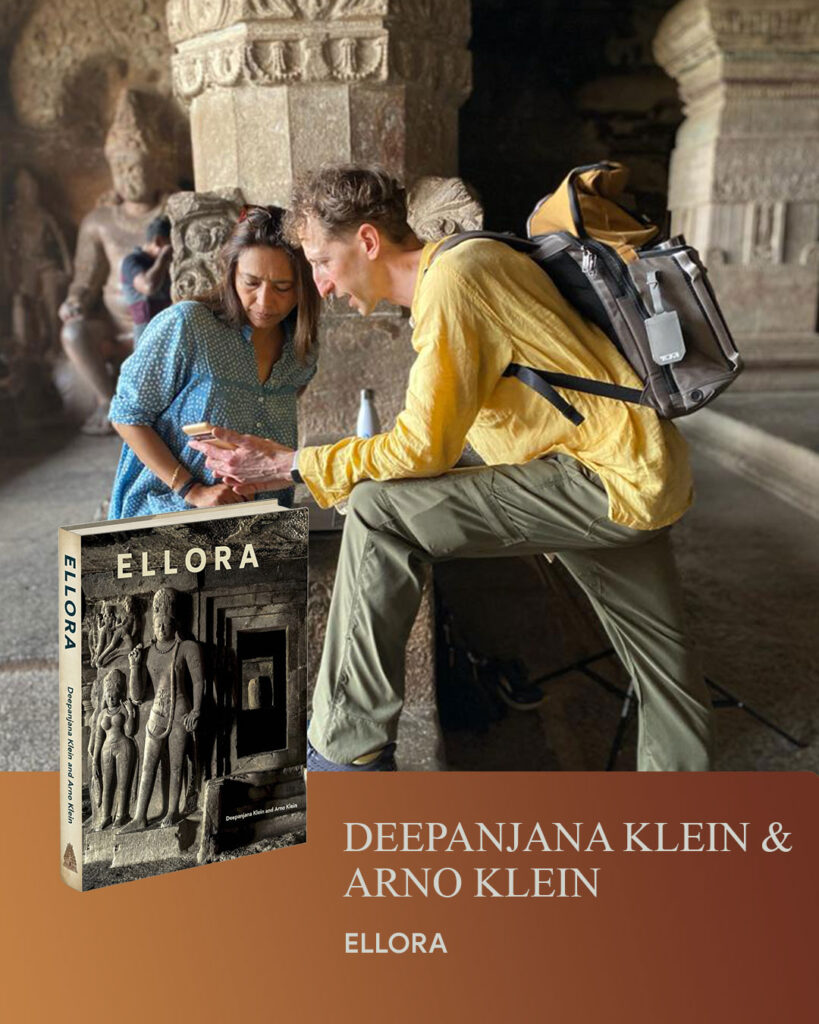
Ellora: Cross-Fertilization of Style in Buddhist, Hindu and Jain Cave Temples
by Arno Klein
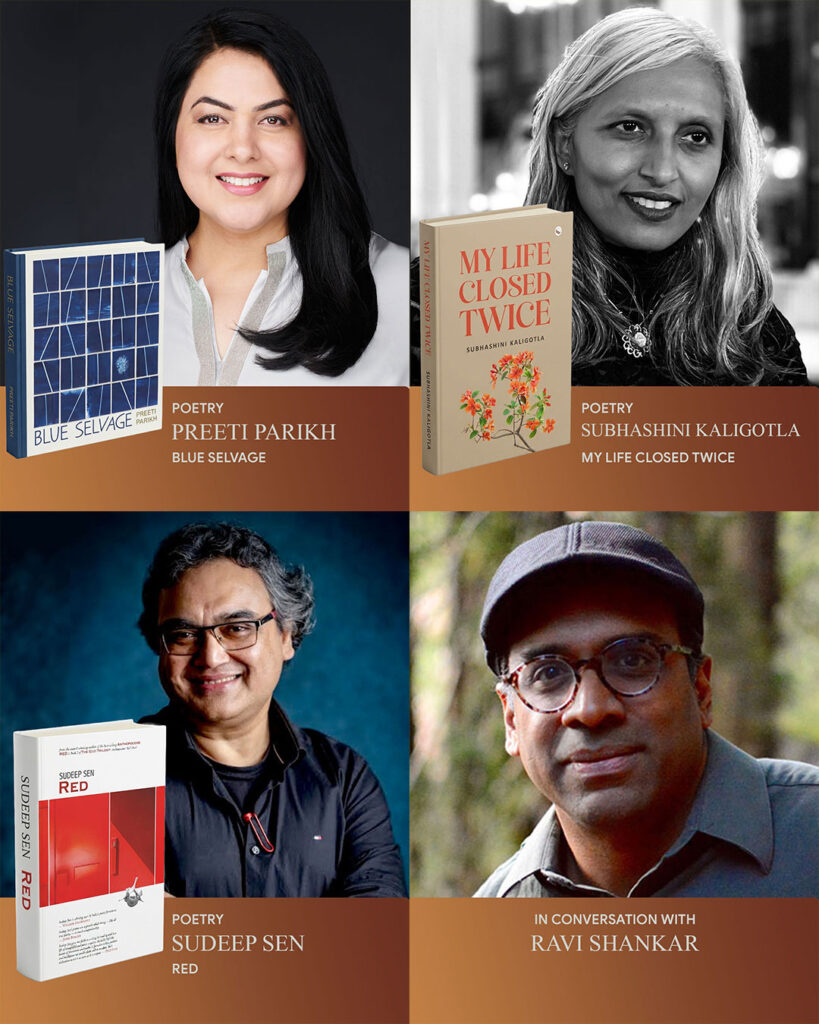
Poetry – Blue Selvage by Preeti Parikh, My Life Closed Twice by Subhashini Kaligotla, RED by Sudeep Sen

SUNDAY PROGRAM
A Sixth Of Humanity: Independent India’s Development Odyssey
by Devesh Kapur and Arvind Subramanian
With panelists Chip Kaye and C.S.Venkat
This is a placeholder development site.
The content here is for review and simulation purposes only.
SATURDAY PROGRAM
November 14, 10AM-6PM
Saturday, 14 November 2026
10.00 – 10.50 AM
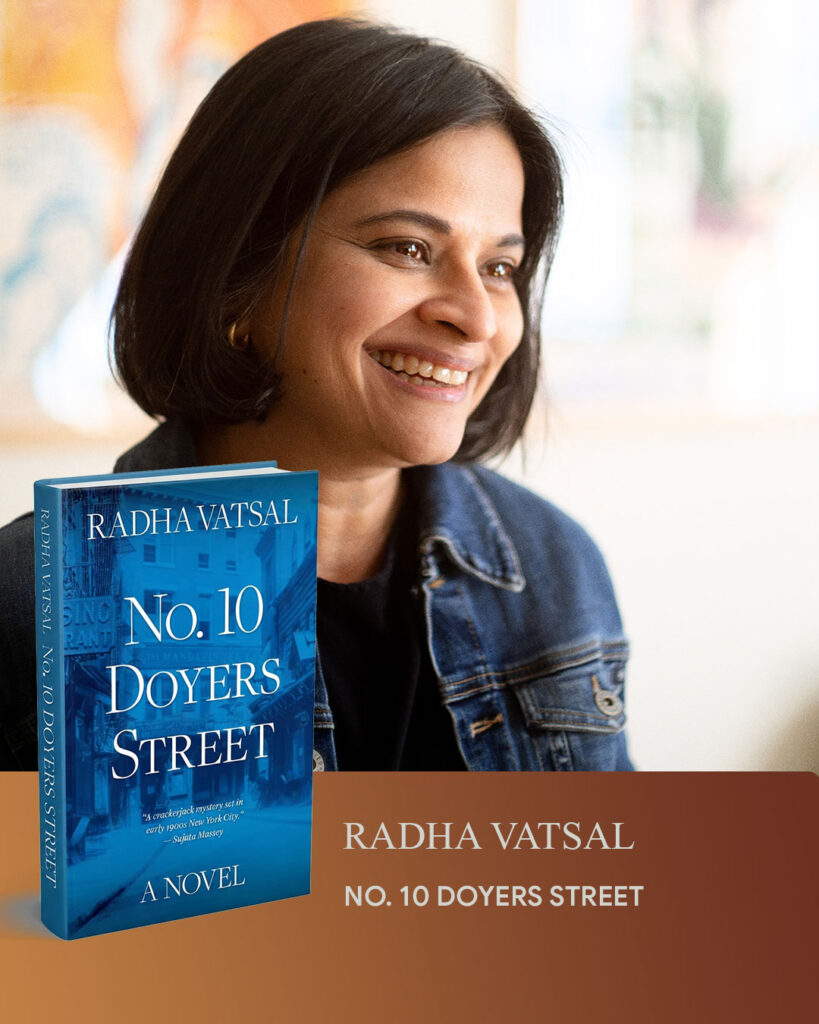
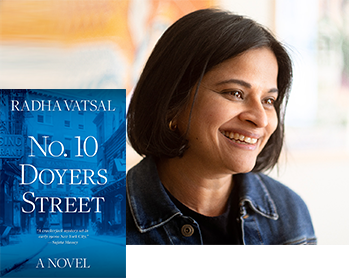
Radha Vatsal
Book Talk: No. 10 Doyers Street
Radha Vatsal is the author of the acclaimed Kitty Weeks mystery novels set in World War I-era New York. Her writing has appeared in The New York Times, The Atlantic, and the Los Angeles Review of Books. Born and raised in Mumbai, India, she earned her Ph.D. in Film History from Duke University and has worked as a film curator, political speechwriter, and freelance journalist. She lives in New York City. Visit her website at www.radhavatsal.com.
Book
NEW YORK CITY, NY (September 25, 2024) — Radha Vatsal’s historical crime novel, No. 10 Doyers Street, is set against the backdrop of New York City’s Chinatown in the early 1900s. When Archana Morley, a woman journalist from India, becomes embroiled in a case involving the infamous gangster Mock Duck and his young daughter, she soon realizes that the case could be tied to the mayor’s plan to raze Chinatown.
Vatsal offers an original pan-Asian exploration of New York City history, bringing to life the challenges immigrants faced as the city made way for the modern era. Archana embarks on a quest for the truth that leads her from gritty alleys to the back-room politics of City Hall and beyond. She boldly reports Mock Duck’s story, understanding that her colleagues simply see an immigrant criminal, and not a father fighting for his daughter and home.
Inspired by real events, No. 10 Doyers Street is a gripping crime novel about New York City on the cusp of modernity, as seen through a unique immigrant perspective.
Book Reviews
“This page-turning caper explores the political, cultural, and economic forces that shaped Progressive Era New York.” — Kirkus Reviews
“[A] descriptive, engaging thriller set in the dark alleys of New York’s Chinatown more than a hundred years ago.” — Asian Review of Books
“Radha Vatsal has impressed me with her precise and astute observations and rich detail for some time, and her upcoming book shows Vatsal at the top of her game.” — CrimeReads
“[A]n engrossing read about the erasure of people and their homes and culture in the name of so-called progress.” — Historical Novel Society
In conversation with
Name
Moderator Bio.
Saturday, 14 November 2026
11.00 – 11.50 AM
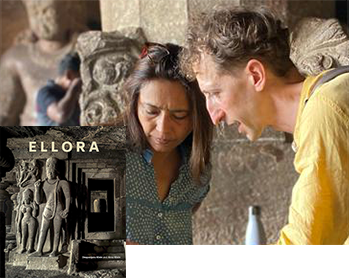
Arno Klein
Book Talk: Ellora: Cross-fertilization of Style in Buddhist, Hindu and Jain Cave Temples
Deepanjana Klein, PhD, is the Special Advisor to the Chairperson, and the Director of Acquisitions and Development, at the Kiran Nadar Museum of Art (KNMA), New Delhi. She has been documenting the Ellora cave temples since 1993. After conducting doctoral research on Ellora, she was awarded a Mellon Foundation grant to create the first comprehensive photo documentation of the site with her husband, Arno Klein, and in conjunction with Dr. Walter Spink, then Professor Emeritus of the University of Michigan. Before KNMA, Dr. Klein served as the International Head of Modern, Contemporary, and Classical Indian and Southeast Asian Art at Christie's for fifteen years, and has also taught art history and theory. Arno Klein, PhD, is a research scientist and the Director of Innovative Technologies at the Child Mind Institute in Manhattan. Dr. Klein has held positions at Columbia University, Stony Brook University, and The New School. He first visited Ellora in 1992 with Professor Walter Spink and has since taken over 10,000 photographs of the site and created the elloracaves.org website.
Book
Ellora: Cross-Fertilization of Style in Buddhist, Hindu and Jain Cave Temples, is a new book about Ellora, a UNESCO World Heritage Site excavated between 600 CE and 1000 CE and the only cave temple site that houses Buddhist, Hindu, and Jain temples. The contributing authors investigate the caves by religion and myth, patronage and support, stylistic influence and exchange, chronology, and the process of carving and completion of these rock-cut temples. The book includes extensive photographic documentation, ground plans, and rarely seen 19th-century archival materials. [Co-edited by Deepanjana Klein and Arno Klein, with contributing authors Nicolas Morrissey, Lisa N. Owen, Vidya Dehejia, and Pia Brancaccio; with a foreword by Naman Ahuja. Contains 203 photographs by Arno Klein, 29 illustrations, and 22 drawings.]
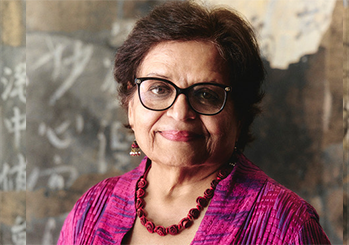
In conversation with
Vishakha Desai
Vishakha N. Desai is a scholar, teacher and an institutional leader, with expertise in Asian art and culture and its connection to contemporary issues. She currently serves as senior advisor to Columbia Global, and as a senior Fellow at Committee on Global Thought at Columbia University where she has been over a decade, as a Senior Advisor for global affairs to the president of Columbia University, senior research scholar in Global Studies at its School of International and Public Affairs and chair of the Committee on Global Thought at Columbia University. She is President Emerita of the Asia Society (2004–2012) where she also served as director of its Museum and as Senior Vice President (1990-2004). In recognition of her leadership in the museum field, President Barack Obama appointed her to serve on the National Commission on Museums and Libraries in 2012. Desai has been recognized as one of the "Most Powerful Women in New York" by Crains Magazine, and for her Distinguished Service to the Visual Arts by ArtTable. She has received five honorary degrees. In addition to scholarly publications and articles, Dr. Desai also has published an award-winning memoir "World as Family: A Journey of Multi-Rooted Belongings" (Columbia University Press, 2022) and the recent academic anthology, “Politics of Visual Arts in a Changing World, 2014-2024” (Columbia University Press, 2026).
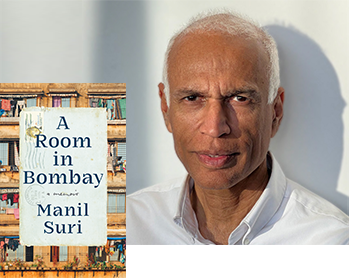
Saturday, 14 November 2026
11.00 – 11.50 AM
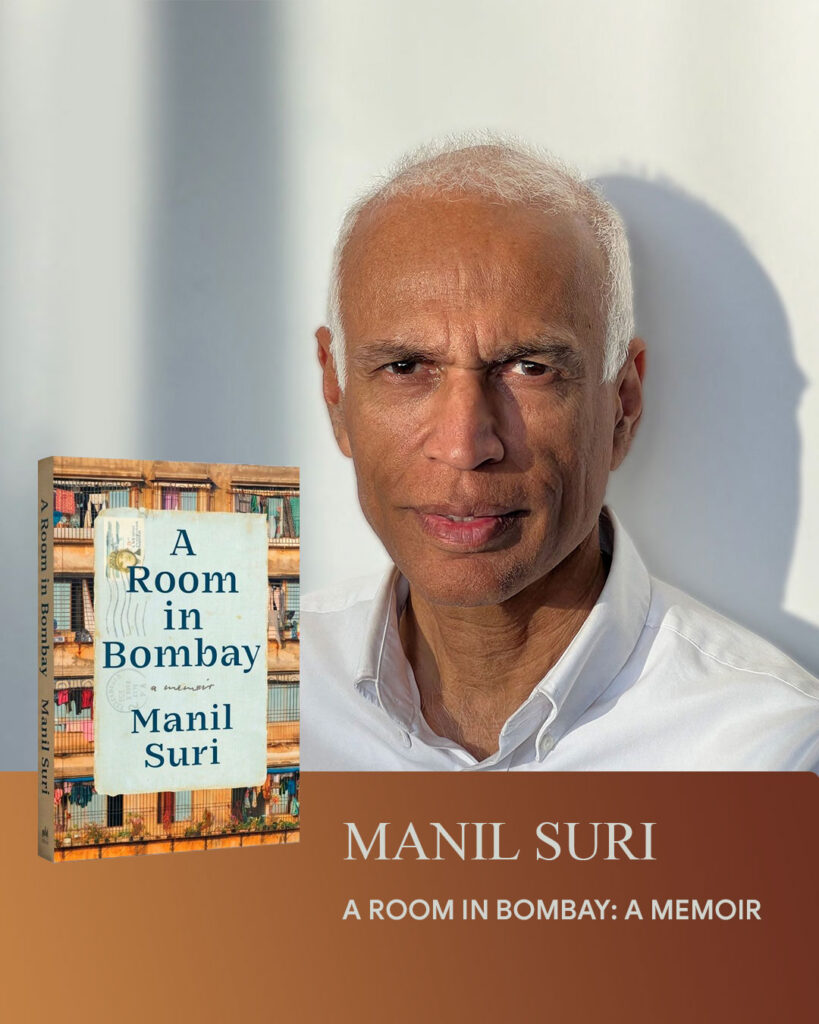
Manil Suri
Book Talk: A Room in Bombay: A Memoir
Manil Suri is the author of three internationally acclaimed novels including The Death of Vishnu, and a book on popular mathematics, The Big Bang of Numbers. His work has been translated into 27 languages and received several honors, including winning the Barnes and Noble Discover Prize, and being longlisted for the Booker Prize.
Book
Manil Suri is the author of the memoir, A Room in Bombay, three internationally acclaimed novels, The Death of Vishnu, The Age of Shiva and The City of Devi, and a book on popular mathematics, The Big Bang of Numbers. His work has been longlisted for the Booker Prize, shortlisted for the PEN/Faulkner, Lambda Literary, and PEN/E.O. Wilson Literary Science Writing Awards, and won the McKittrick Prize and the Barnes & Noble Discover Award, among others. He has served as a contributing opinion writer for the New York Times and is an emeritus professor of mathematics at the University of Maryland, Baltimore County.
Book Reviews
"Drawing on the 2,711 letters that his mother cherished, Suri has created a probing memoir about his family, especially the deep bond between him and his mother; his homosexuality; and the uncanny hold the apartment exerted on them all. . . . an empathetic portrait of his parents’ entrapment, and a candid account of his struggle to be responsible to them, and to himself." ― Kirkus
"In the Hindu epic, The Ramayan, Shravan exemplifies a devoted son, caring for his aging blind parents. That renowned novelist Suri mentions Shravan’s story in his moving memoir reflects the guilt he struggles with as he immigrated to the U.S. . . . Suri emerges as a Shravan for our times, demonstrating extraordinary patience and service to his parents under severely trying circumstances." ― Booklist
"Suri expertly parallels the apartment's combination of claustrophobia and coziness with his conflicted feelings about his aging parents . . . His portrait of [his mother] is clear-eyed and prismatic, highlighting both her sweetness and her intensity. Readers will find this a moving consideration of the ties that bind." ― Publishers Weekly
"In an effort to make the distance between himself and his parents more bearable, Suri writes letters -- more than 2,700 of them, all addressed to Prem. They show the richness, honesty and humor of his life. You will remember A ROOM IN BOMBAY long after you put it down as you consider your own understanding of home." ― Bookreporter
"Drawing from thousands of letters sent over three decades, Suri’s memoir revisits the single room in a crumbling, crowded apartment in Bombay (now Mumbai) that his family shared. Part prison, part haven, the room is imbued with deeper meaning as Suri wrestles with his enduring love for his mother." ― New York Times
"Rooms in Bombay are not big in size, but huge in heart. Manil Suri’s memoir will make you want to hug your mother. Written in clean, direct prose and without sentimentality, it explores all the dimensions of the complicated bond between parent and child―while also being laugh out loud funny. If you were born of a mother, read this book." ― Suketu Mehta, author of Maximum City: Bombay Lost and Found
In conversation with
Moderator Bio
Moderator Bio
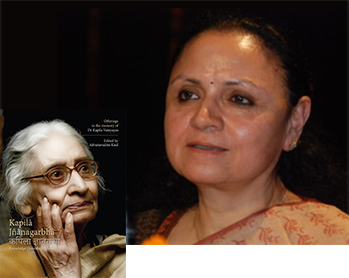
Saturday, 14 November 2026
12:00 – 12:50 PM
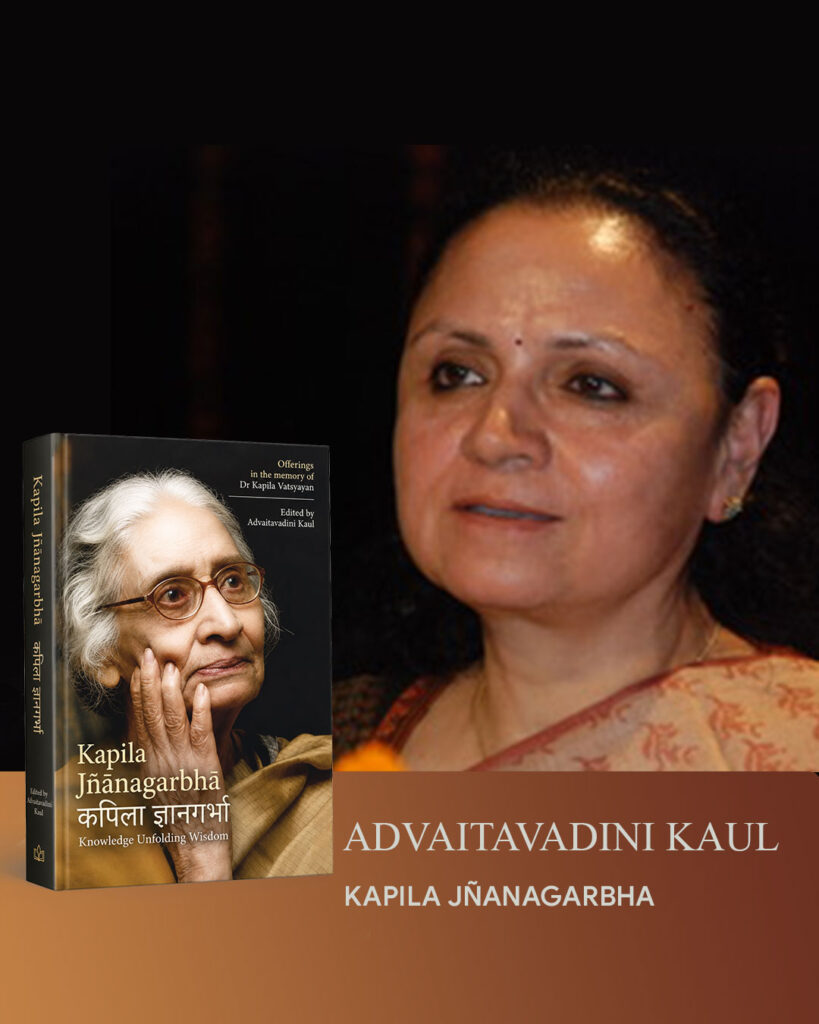
Advaitavadini Kaul
Book Talk: Kapila Jnanagarbha: Knowledge Unfolding Wisdom
I have dedicated my career to the study of Indian aesthetics, philosophical traditions, and the cultural heritage of Kashmir. After serving in senior academic positions at the Indira Gandhi National Centre for the Arts (IGNCA), New Delhi, INDIA for about three decades, I have continued to publish extensively. The title of my first book published in 1987 is, “Buddhist Savants of Kashmir and their Contributions Abroad". My recent works include the edited volume, "Asian Aesthetic Theories and Art Forms" published by IGNCA & D K Printworld (jointly) in 2021 and my latest book, लल्लेश्वरी के वाख़ was published by the Sahitya Akademi, New Delhi in 2024. It includes the Hindi verse translation of a collection of Kashmiri Vakhs of the14th century Saiva Yogini of Kashmir -Lalded.
Most recently, I conceptualized, curated and edited the commemoration volume titled, “Kapila Jnanagarbha: Knowledge Unfolding Wisdom – Offerings in Memory of Dr. Kapila Vatsyayan". It was Published in February 2026 by one of the leading publishers of Indological book known as Dev Books. The first copy of this volume was presented to His Holiness the Dalai Lama on April 27th at his residence in Macleod Ganj. The Dalai Lama used to address Dr. Kapila Vatsyayan as ‘Mataji’. A formal release and panel discussion on this volume was held at the India International Centre (IIC), New Delhi on May 21st. The volume serves as a comprehensive document reflecting the vision and contributions of Dr. Kapila Vatsyayan, one of India’s leading visionary personalities whose contributions have been immense in the restoration and preservation of India’s holistic art and culture at various levels.
Book
Kapilā Jñānagarbhā is the bouquet of variegated hues presented in the form of a volume of offerings to
Dr. Kapila Vatsyayan by eminent personalities, expert scholars and artistes, also her family to keep the
fragrance of her vision and contributions fresh and vibrating to inspire future generations.
The title, Kapilā Jñānagarbhā: Knowledge Unfolding Wisdom, in itself celebrates the core qualities of the
personality whom we have seen in constant search for knowledge till her last breath. Through her
wisdom she made use of her acquired knowledge at various levels and in innumerable ways for reviving
and saving India’s holistic traditions of knowledge. In achieving her goals, it was her education in the
West, that provided her the critical tools and the ability to analyse things from multiple points of view
and the learning in India equipped her at the experiential level. Her contributions are immense.
Present volume is divided into two parts. Part I has two sections. The section A contains the Tributes by
eminent persons and section B has ten papers by eminent scholars highlighting Dr. Kapila Vatsyayan’s
vision and contributions. Part II contains academic papers by the scholars, experts in their respective
fields, who have remained closely associated with Dr. Vatsyayan and have got benefited or influenced by
her knowledge and wisdom by one way or the other. Part II is arranged in the Sections: C on Veda: The
Source of Knowledge; D on Sastra/Theory and Prayoga/Praxis; E on Kashmir Śaivism; F on Indian
Aesthetics; and G on Culture and Civilization.
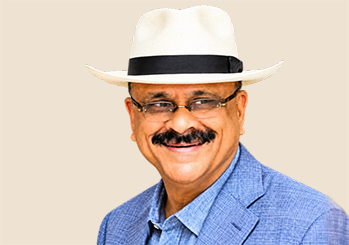
In conversation with
Rakesh Kaul
Rakesh Kaul, an Indian Institute of Technology gold medallist, migrated to the US in 1972. He moved to the US to pursue his Master’s program in solar cells at Brown University. He was a Leon Carroll Marshall Fellow at the University of Chicago Graduate School of Business. He helped found the first Chair of India Studies at the University of California, Berkeley, the Center for the Advanced Study of India at the University of Pennsylvania, and the Mattoo Center for India Studies at the State University of New York. He is the author of the bestseller The Last Queen of Kashmir, published by HarperCollins and translated into Hindi, and the critically acclaimed Dawn The Warrior Princess of Kashmir, published by Penguin. His short story, The Last Delivery, was shortlisted for the prestigious Bridport Prize Short Story in 2025. Kaul has had a distinguished business career as a CEO and has held leadership positions at publicly traded US companies. His latest novel, WaterFire Day Zero, is published in India by Vitasta Publications and in the UK by Pippa Rann Books. He serves as Vice Chair of the Indo-American Arts Council in New York City and is an active columnist for leading media outlets www.RakeshKKaul.com
Saturday, 14 November 2026
10.00 – 11.50 AM
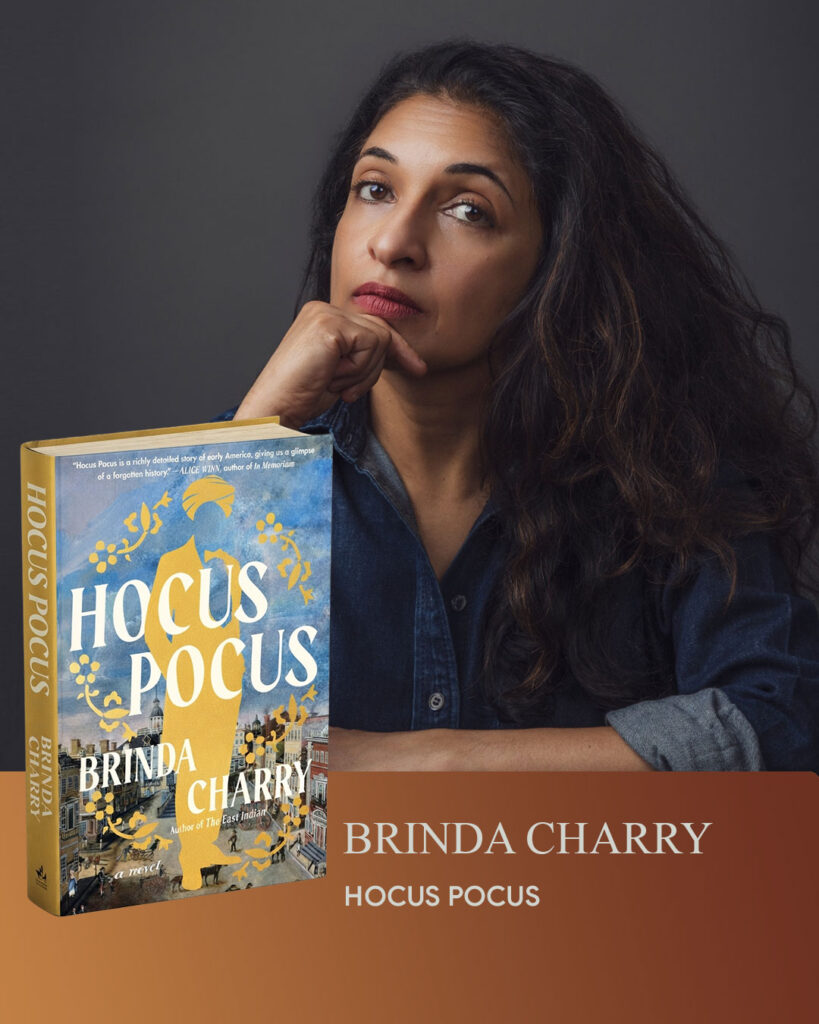
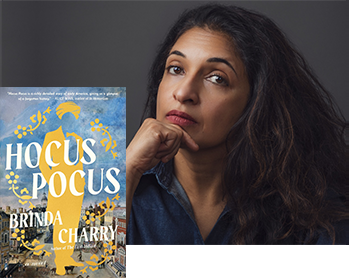
Brinda Charry
Book Talk: Hocus Pocus
Brinda Charry was born and raised in Bangalore, India. She came to the United States as a graduate student in 1999 and has lived here since. Brinda's earlier work in fiction included a number of short stories published in magazines and newspapers and broadcast over radio, as well as two novels (THE HOTTEST DAY OF THE YEAR and NAKED IN THE WIND) and a collection of short fiction (FIRST LOVE AND OTHER STORIES, which were published by Penguin (India) and Harper Collins (India). After these publications, Brinda took a break from creative work to focus on academic writing and published a number of books and articles in her field of research (the works of Shakespeare and contemporaries). In 2020 she decided to return to fiction. Her novel THE EAST INDIAN, on the first South Asian on record to arrive in North America (in 1635) was published in 2023 by Scribner (USA), Scribe (UK), Harper Collins (India). HOCUS POCUS (forthcoming, August 2026) is her second novel to be published in the USA. Brinda has won several awards and recognitions for her fiction: these include the Katha Award For Creative Fiction (twice), a prize in the BBC short story contest, Commonwealth Broadcasting Association Prize, Hindu-Picador prize, India Plaza Golden Quill award. THE EAST INDIAN was longlisted for the JCB Prize, the Mark Twain Voice in American Literature Prize, shortlisted for the Barnes and Noble Discover Prize and the Crossword Prize, and won the Society of American Historians Prize (formerly James Fenimore Cooper Prize) for Historical Fiction. Brinda now lives in New Hampshire.
Book
A young magician travels across the world seeking fame and fortune all the while hiding a secret, in a novel based on the renowned, real-life Indian stage magicians performing in the United States in the 1800s Samuel Thomas, a young magician of uncertain parentage journeys from India to the fog-shrouded streets of Boston in 1816, the infamous Year Without a Summer. In this season of unrelenting cold, Samuel arrives in a city alive with ambition, contradiction, and tension. Enter Walter Mepham, proprietor of the New Boston Museum which is on the brink of bankruptcy. Walter thinks Samuel is the ideal fit for the first live addition to the collection. While the perfect solution to each other's problems, the relationship between the two men quickly becomes complicated. Richly detailed and vividly conjured, Hocus Pocus is a story about art, ambition, and desire, and captures the crackling energy and wonder of a bygone era through the eyes of a young performer.
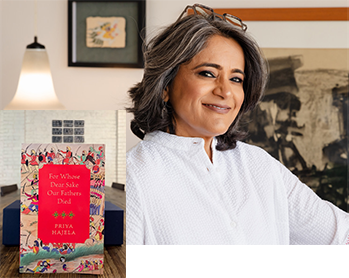
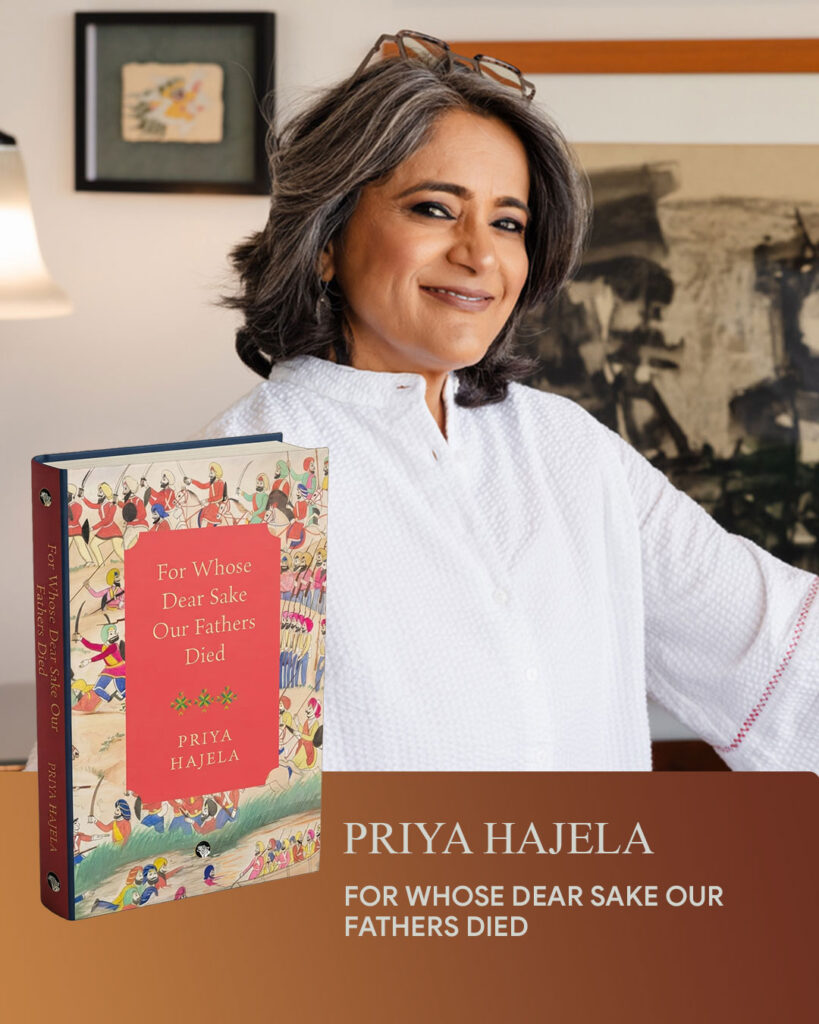
Priya Hajela
Book Talk: For Whose Dear Sake Our Fathers Died
Priya Hajela is a fiction writer who lives in Pune, Goa, and New York. Priya graduated with an MFA in Creative Writing from Goddard College in Vermont in 2017 after a twenty-two year corporate career in Telecom and IT.
She is the author of Ladies’ Tailor, a novel published by Harper Collins India in 2022. An excerpt from Ladies’ Tailor was used in a collection of stories about Delhi titled Basti and Durbar, edited by Rakshanda Jalil.
Her new novel, For Whose Dear Sake Our Fathers Died (Speaking Tiger, 2026) released on July 26th. She is currently working on a non-fictional account of the lives of the ten Sikh Gurus, scheduled to launch in November 2026.
Book
From the author of Ladies' Tailor, For Whose Dear Sake Our Fathers Died is a sweeping multigenerational saga that follows a Sikh family through nearly a century of war, empire and resistance—from the Anglo-Sikh Wars and the uprising of 1857 to the Komagata Maru incident, the freedom movement and Partition. This powerful novel, published by Speaking Tiger Books, explores the complex relationship between the British and the Sikh community shaped by dependence, loyalty, betrayal, and memory.
On writing the book, Priya Hajela says: ‘In my first novel, I wrote about Partition but mostly I wrote about resilience, adventure, persistence and zest. As we become more self-absorbed as individuals, families, communities and nations, I believe zest is losing out and adventure has gone missing. A look back at times that called for taking chances, stretching our wings to fly high but sometimes crashing, may bring back exuberance and joy. In this book, I write about men who lead as is expected of them and women who carry the weight, who push, and who astonish. These are stories of the men and women whom history forgot.’
Book Reviews
‘Moving through time, from the Anglo-Sikh wars to the 1857 rebellion and the later Komagata Maru Voyage - wherein Sikh passengers were shipped to Vancouver, Canada, resulting in an arduous and tragic standoff - the book reveals the many-sidedness of these events. Just as it’s unfair to indict the progeny of any race or community for ancestral missteps, it’s lazy on our part to subscribe to common tropes and simplified histories. History is not only about the big picture, as Hajela shows us, but about little things. Reading this fictional account can inspire us to delve into family archives - oral accounts, photographs, letters - to resurrect our own complicated and compelling pasts.’ Brinda S. Narayan, Author
‘Given the inflated uber-nationalistic sentiment that seems to prevail today, one might have imagined that a book where two of the three main characters are pro-British might be a dangerous thing to attempt. But Hajela’s grasp of human nature, and her ability to explore the minds and hearts of men who might have served the British without actually being anti-Indian, makes this novel more than just a history of Sikh soldiers. It becomes a thought-provoking look at how loyalty works, how we might be torn two ways, how we might decide to side with a man rather than the ethos he (perhaps unwittingly, or unwillingly?) might represent…An excellent historical novel, and highly recommended.’ Madhulika Liddle
A few reviews/blurbs of the book - https://priyahajela.com/buzz/
In conversation with
Manreet Sodhi Someshwar
Manreet Sodhi Someshwar is a traditionally-published, award-winning, and bestselling writer of nine books, including the Mehrunisa series, the critically-acclaimed The Long Walk Home and The Radiance of a Thousand Suns, and most recently, The Partition Trilogy. Hailed as 'a star on the literary horizon' by Khushwant Singh and garnering endorsements from Gulzar for two of her books, Manreet and her work have featured at literary festivals in Singapore, Shanghai, Hong Kong, India and NYC. Her articles have appeared in The New York Times, the South China Morning Post and several Indian publications. With an MFA from City College New York, Manreet is on the faculty of Gotham Writers. She lives in New York with her husband, daughter, and cat.
Saturday, 14 November 2026
03.00 – 03.50 AM
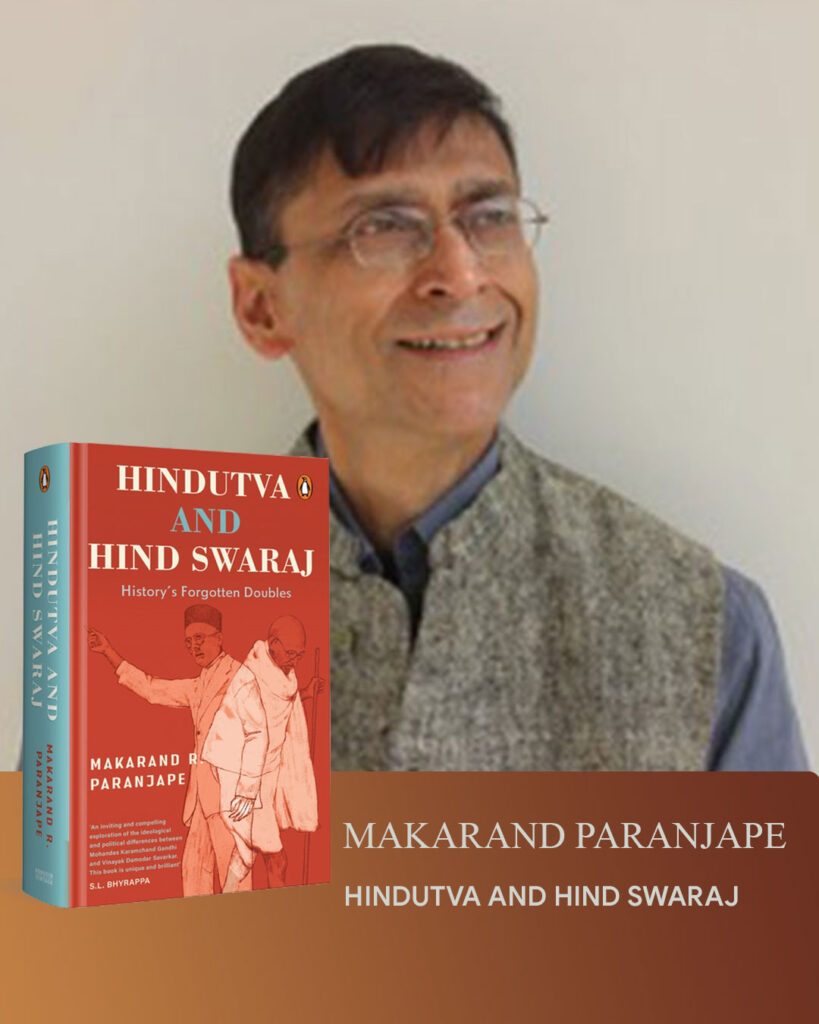
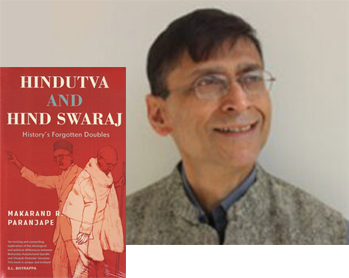
Makarand Paranjape
Book Talk: Hindutva and Hind Swaraj: History’s Unforgotten Ideas
Makarand R. Paranjape has been Professor of English at Jawaharlal Nehru University, New Delhi, for over twenty-three years. He also served as the Director, Indian Institute of Advanced Study, Shimla. The author/editor of over 50 books and hundreds of academic papers, he is also a poet, novelist, columnist, and public intellectual. His latest books include JNU: Nationalism and India’s Uncivil War (Rupa, 2022), Identity’s Last Secret (BluOne, 2022), and Swami Vivekananda: Hinduism and India’s Road to Modernity (HarperCollins, 2020). He has been in touch with the works of Sri Aurobindo and modern India’s spiritual masters for over forty years.
Book
Hindutva and Hind Swaraj: History’s Forgotton Doubles | The Battle of Ideas in Indian History and Politics | Hindu Identity, Nationalism, and Democracy
Makarand R Paranjape
A close reading of the persistent antagonisms in Indian history, Hindutva and Hind Swaraj focuses on the ideological clash between Mohandas Karamchand Gandhi and Vinayak Damodar Savarkar, representing the broader ideological, political, and cultural factions within Hindu and Indian society. The central argument is that this antagonism continues to influence national life, both politically and personally, reflecting two contrasting ideologies: Hindutva and Hind Swaraj.
Divided into three parts, the first part addresses the lack of historical records in ancient India and the importance of creating a national history to reclaim India’s past. In the part second part, the author examines the discovery of India’s cultural and historical identity, the impact of colonialism, and the need for a balanced discourse that acknowledges the complexity and diversity of Indian society. While the third looks at the e contemporary political landscape, the rise of Hindutva, and the ongoing struggle between Gandhi’s vision of non-violent resistance and Savarkar’s advocacy of armed rebellion. It highlights the unresolved tensions between these two ideologies and their implications for India’s future.
The book emphasizes the need for a new approach to understanding and reconciling these differences, suggesting that a balanced discourse and a deeper inquiry into the nature of nationalism, democracy, and Indian society are essential for creating a new India.

In conversation with
Indu Vishwanathan
Indu Viswanathan is an educator, researcher, writer, and public scholar. She is the author of Hindu at Heart: Education, Faith, and What It Means to Belong in America, which reimagines the story of American public education through the place of Hinduism and Hindus in its history, drawing on archival research, personal narrative, and the experiences of Hindu American families. Across her teaching, research, writing, and public pedagogy, Viswanathan focuses on belonging, intergroup dialogue, and building pluralist communities. She holds an M.A. and Ed.D. in Curriculum and Teaching from Teachers College, Columbia University, and a B.A. in Economics from Cornell University. She is also co-founder of The Turtle, a future-facing platform that re-centers the feminine while exploring diasporic Hindu society, culture, and community through writing, conversation, creative expression, and shared learning. A lifelong New Yorker, she lives in Brooklyn.

Saturday, 14 November 2026
04.00 – 04:50 PM
POETRY
Preeti Parikh
Book Talk: Blue Selvage
Preeti Parikh is a poet and essayist with a past educational background in medicine and a recent MFA from The Rainier Writing Workshop. A Kundiman Fellow and National Poetry Series finalist, she is the recipient of a 2023 Sustainable Arts Foundation grant award and a 2024 Ohio Arts Council Individual Excellence award. Preeti's poems appear in Beloit Poetry Journal, The Cincinnati Review, Hayden's Ferry Review, The Margins, Zocalo Public Square, and other literary journals. Her writing is anthologized in Nonwhite and Woman: 131 Micro Essays on Being in the World, the Yearbook of Indian Poetry in English (2021 and 2022 editions), and The Last Milkweed. Preeti has been a Millay Arts Artist-in-Residence and an AWP Writer to Writer Program mentee and has received staff scholarships from the Bread Loaf Writers' Conference. Her work has been performed in a poetry-ballet collaboration and exhibited at the 2025 Creative Asian Society Art Exhibition. Born and raised in India, she now lives with her family in Ohio. Preeti Parikh's collection of poems, BLUE SELVAGE, named by Debutiful as one of The Debut Poetry Collections You Need to Read in 2026, will be out in November from Tupelo Press.
BOOK
Blue Selvage is a formally daring, deeply embodied meditation that weaves lyric, essay, documentary fragments, and historical reckoning into an exploration of skin, cloth, color, and form as living archives. Here, passion for indigo, a medical-science-informed perspective, fascination with the materiality of cloth and skin, and a journeying towards reclamation interlace with feminist inquiries and cultural examination to conceptualize the poems' multivalent inhabitances. Expansive in its rhetorical modes and landscapes, Blue Selvage is unified by a remarkable singularity of voice and vision through which Parikh skillfully invokes form as metaphor, performance, dramatization, and content. What emerges is a capacious field of attention, where intimacy and history press against one another, and where writing itself becomes an act of unstitching and re-making—an ethical, sensuous practice of staying with what the body remembers and what culture would prefer to erase.
BOOK REVIEWS
ADVANCE PRAISE FOR BLUE SELVAGE (TUPELO PRESS, NOV 2026)
Poetry as the work of embodiment, of transformation—this principle manifests as a gorgeous new expression in Blue Selvage. But as Preeti Parikh shows, the arc towards self-realization is also about the tensions between raveling and unraveling, stitching and unstitching, text and lacuna. Delving into the intimacy of memory and the violence of history, Parikh understands that “opacity and translucence” are both necessary to deep testimony. Bold in its forms and defiant in its truths, Blue Selvage is a radiant debut. — Rick Barot, Author of Moving the Bones
The artistry of Preeti Parikh’s debut collection, Blue Selvage, is one of daring precision—an embroidery of vivid, textured language that explores the instability of boundaries and the implications of integument: cover and exposure, clothing and skin, diaspora and the “dreamcloth” of identity. This is the poetics we need today, one that deeply enacts the decentralization of power by meditating on edges both frayed and selvaged and traversing the thresholds of body, language, culture, and memory. Parikh’s multi-lingual, multi-modal tapestry is beautiful, articulate, and brave. A refreshing and liberating voice! — Jennifer Elise Foerster, Author of The Maybe Bird
Blue Selvage is an inventive palimpsest of South Asian history and autobiography, unspooling the female body and the weight of its inheritance. Braiding memory with etymology, and medical terminology with the cadences of Hindi and Gujarati, Parikh navigates multiple geographies—clinical, domestic, diasporic. Here, fabric both covers and bares. The body is archive and anatomy, born a ‘milky clump’ of cotton and marked by indigo's colonial violence. This is fierce work on the gaze and its exposures, a reckoning with touch, shame, and desire that stains the reader's mind blue and selvages the self. A stunning debut by a luminous new voice. — Shikha Malaviya, Author of Anandibai Joshee, A Life in Poems
Blue Selvage is a chronicle of dichotomies, both difficult and joyful. Preeti Parikh’s debut collection of poems is exhilarating. Here we find a convincingly modern mind — one formed in girlhood on one continent and evolving into an empowered woman and poet on another. The tensions of family and culture explored in this book are numerous: what’s lost and what’s found; what’s private and what’s a violation; what’s a mask and what’s a face; what is broken and what is healed. The concentrated, formally varied poems weave shame and empowerment, the buried and the unearthed, the forgotten and the remembered. When Parikh writes, “let the fabric breathe,” she is conveying complexities of feeling, fluency, and morality that any reader will recognize as clarity and grace. — David Biespiel, Author of Beautiful Is the World
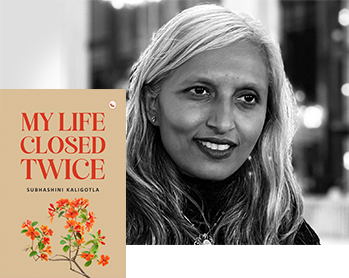
Subhashini Kaligotla
Book Talk: My Life Closed Twice
Subhashini Kaligotla is a poet and an art historian of premodern South Asia. Her first poetry collection, Bird of the Indian Subcontinent (2018), was a finalist for the Kundiman Poetry Prize and won the Great Indian Poetry Collective's Emerging Poets Prize, selected by Arundhathi Subramaniam. Her second poetry volume, My Life Closed Twice (2025), has been longlisted by the Kalinga Literary Festival for their 2026 award for best poetry collection. Poems in the collection have appeared in such journals as The Paris Review, Guernica, and Open Magazine, and have been included in several anthologies of Indian and diasporic poetry, notably The Penguin Book of Indian Poets (2022). Kaligotla is author of the art history monograph, Shiva's Waterfront Temples: Architects and Their Audiences in Medieval India (Yale, 2022) and is Barbara Stoler Miller Associate Professor in the Department of Art History and Archaeology at Columbia University.
BOOK
Grief does not travel in straight lines; it spirals, echoes and persists. My Life Closed Twice embodies this truth profoundly. Subhashini Kaligotla's second collection immerses you in loss, weaving together fragments and litanies, lists and unanswered questions, revisiting the same wound from varied perspectives. Rooted in the art, literature and history of premodern India, these poems articulate an ancient language of private devastation.
BOOK REVIEWS
Subhashini Kaligotla's ingeniously fashioned poetic structures—which are light, flexible, delicate yet possessed of remarkable tensile strength and architectural clarity and integrity—aren't just beautiful in themselves. They're also vessels for deep imaginative feeling and thinking and wondering and longing. She has a unique, compelling lyric voice and a distinguished twenty-first century consciousness. — Vijay Seshadri
Anger, denial, bargaining, despair, all the stages of grief except acceptance, each stage overlaid with the forensic precision generated by love when it has nowhere to go. These enraged, laceratingly plainspoken poems burn with the singular self-awareness that is the writer's curse, and the writer's gift. Two deaths enclose the book like ‘two dates // enclosed / by parentheses’. It is impossible to read, say, ‘Only Your Brother Will You Lose’—its fifty shards hammered into the flesh like fifty nine-inch nails—and come away unscathed. — Jeet Thayil
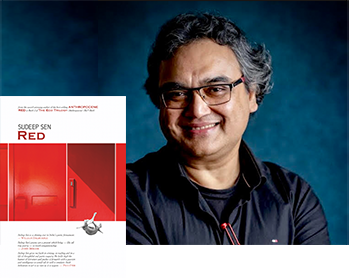
Sudeep Sen
Book Talk: RED
Professor of Practice, Dept of English & Cultural Studies, Panjab University, Chandigarh, India; Visiting Associate, Centre for Indian Studies in Africa (CISA), University of Witwatersrand, Johannesburg, South Africa, and Co-Chair, Asia-Pacific Writers & Translators (APWT), Australia. Formerly, he was Visiting Scholar at Harvard University, USA.
He is a leading international poet whose prize-winning books include: Postmarked India: New & Selected Poems (HarperCollins), Aria (A K Ramanujan Translation Award), Fractals: New & Selected Poems | Translations 1980-2015 (London Magazine Editions), EroText (Penguin), Kaifi Azmi: Poems | Nazms (Bloomsbury), Bhutan (Drunken Boat, USA), Anthropocene (Pippa Rann, Rabindranath Tagore Literary Prize), Red (Pippa Rann), and Rock completes ‘The Eco Trilogy’. Edited landmark anthologies include: The HarperCollins Book of English Poetry, Modern English Poetry by Younger Indians (Sahitya Akademi), Converse: Contemporary English Poetry by Indians (Pippa Rann, UK), and Himalayas (Shearsman Books, UK). Blue Nude: Ekphrasis & New Poems (Jorge Zalamea International Poetry Prize), Rock, and The Whispering Anklets are forthcoming.
His photography, represented by ArtMbassy, Rome/Berlin, is part of private/public collections. The Government of India awarded him the senior fellowship for “outstanding persons in the field of culture/literature.” Sen is the first Asian honoured to deliver the Derek Walcott Lecture and read at the Nobel Laureate Festival.
BOOK
Sudeep Sen's prize-winning books include: Postmarked India: New & Selected Poems (HarperCollins), Aria (A K Ramanujan Translation Award), Fractals: New & Selected Poems | Translations 1980-2015 (London Magazine Editions), EroText (Penguin), Kaifi Azmi: Poems | Nazms (Bloomsbury), Anthropocene (Rabindranath Tagore Literary Prize), Red and Rock. Edited landmark anthologies The HarperCollins Book of English Poetry, Modern English Poetry by Younger Indians (Sahitya Akademi), Converse: Contemporary English Poetry by Indians (UK), and Himalayas (UK). The Government of India awarded him the senior fellowship for “outstanding persons in the field of culture/literature.” Sen is the first Asian honoured to deliver the Derek Walcott Lecture and read at the Nobel Laureate Festival.
BOOK REVIEWS
Sudeep Sen is a shining star in India’s poetic firmament. — WILLIAM DALRYMPLE
Sudeep Sen’s poems are a present which bring — like all true poetry — so much companionship. — JOHN BERGER
Sudeep Sen gives me faith in writing, in reading and in a life of thoughtful and poetic enquiry. He holds high the banner of literature and pushes it forwards with a passion and intelligence we would all do well to emulate. Such dedication to art is as rare as it is urgent. — PICO IYER

In conversation with
Ravi Shankar
Pushcart prize winning poet, translator and professor Ravi Shankar has published, edited or has forthcoming over fifteen books, including the Muse India award-winning translations of 9th century Tamil poet/saint, Andal, 'The Autobiography of a Goddess' (Zubaan/University of Chicago), 'The Golden Shovel: New Poems Honoring Gwendolyn Brooks" (University of Arkansas) and 'The Many Uses of Mint: New and Selected Poems 1997-2017' (Recent Works Press). Along with Tina Chang and Nathalie Handal, he co-edited W.W. Norton's "Language for a New Century: Contemporary Poetry from the Middle East, Asia & Beyond" and he founded one of the world's oldest electronic journals of the arts, Drunken Boat. He has taught and performed around the world and currently holds a research fellowship from the University of Sydney. His collaborative chapbook, 'A Field Guide to Southern China' written with T.S. Eliot Prize winner George Szirtes was just published in the UK August 2019 by Eyewear Publishing.
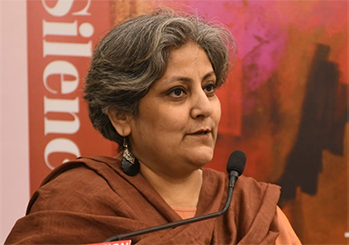
INDUSTRY PANEL:
Saturday, 14 November 2026
02.00 – 02:50 PM
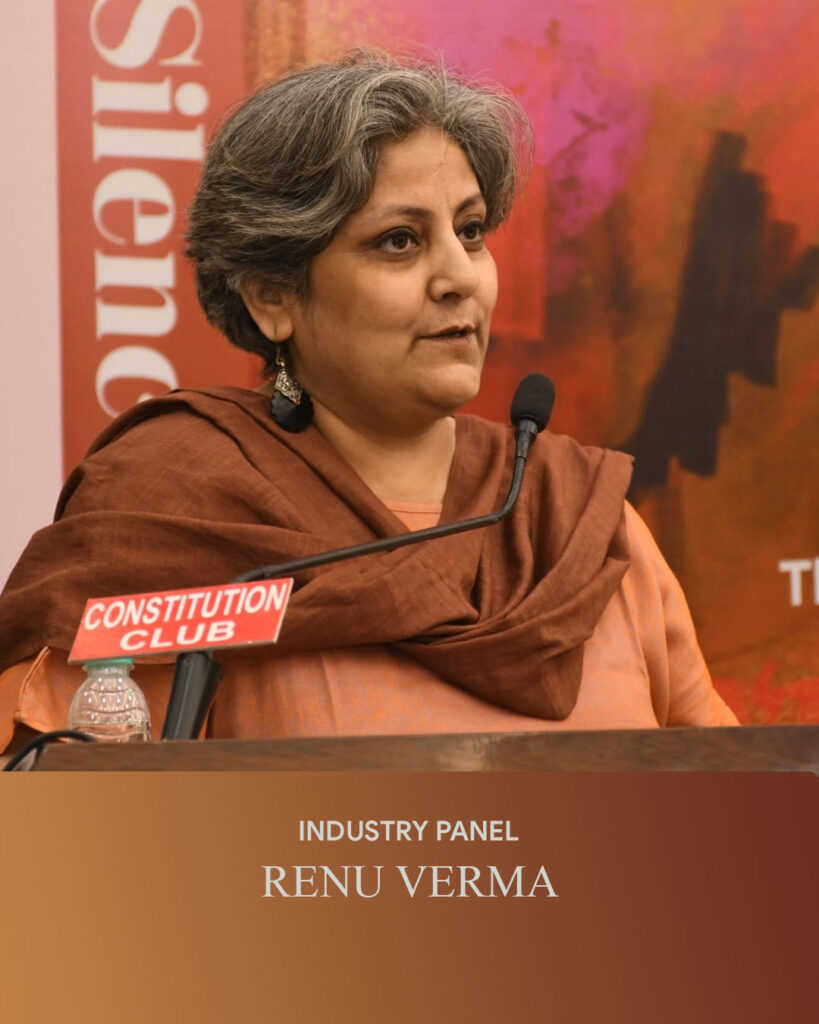
Renu Verma
Industry Panel – Book Name
Renu Kaul Verma is the Managing Director and Publisher of the Vitasta Blackspine Publishing Group. A former journalist with The Indian Express and Hindustan Times, she founded Vitasta Publishing in July 2004 with the conviction that books have the power to shape conversations, preserve memory, and challenge accepted narratives.
Over the past twenty-two years, she has guided the growth of Vitasta from a single-title independent press into a publishing house with a catalogue of more than 700 books across history, politics, biography, gender, literature, philosophy, culture, translations, and children's publishing. Throughout that journey, she has remained committed to publishing works that combine intellectual depth with accessibility.
Working closely with authors, academics, journalists, public intellectuals, and first-time writers, Renu has championed voices that broaden public conversation and bring fresh perspectives to readers. Her editorial vision continues to be guided by a belief in the enduring relevance of independent publishing and the responsibility of publishers to nurture ideas that inform, question, and inspire.
She is a regular participant in literary festivals and publishing forums, where she speaks on independent publishing, editorial stewardship, and the evolving role of books in a rapidly changing world.
About Vitasta Publishing
Vitasta Publishing is an independent publishing house that believes the most meaningful books are those that ask questions, invite reflection, and remain relevant long after they are first read. Guided by its motto, Books That Dare the System, its publishing programme is shaped not by a single genre or viewpoint, but by an enduring curiosity about people, history, ideas, cultures, and the changing world around us.
From its very first publication, Brahmacharya Gandhi and His Women Associates, Vitasta established a distinctive editorial voice by publishing books that question accepted narratives, recover overlooked histories, and encourage informed dialogue. Today, its catalogue of more than 700 titles spans history, politics, biography, literature, philosophy, religion, sociology, children's books, the arts, translations, and contemporary fiction, bringing together established scholars, journalists, public intellectuals, creative writers, and emerging voices.
As an independent publisher, Vitasta remains committed to editorial freedom and to publishing books that are thoughtful, well-researched, and accessible. Whether exploring the complexities of the past, examining the realities of the present, or imagining new possibilities through literature, its books invite readers to think deeply, question generously, and engage openly with the world.
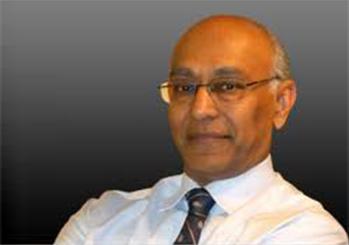
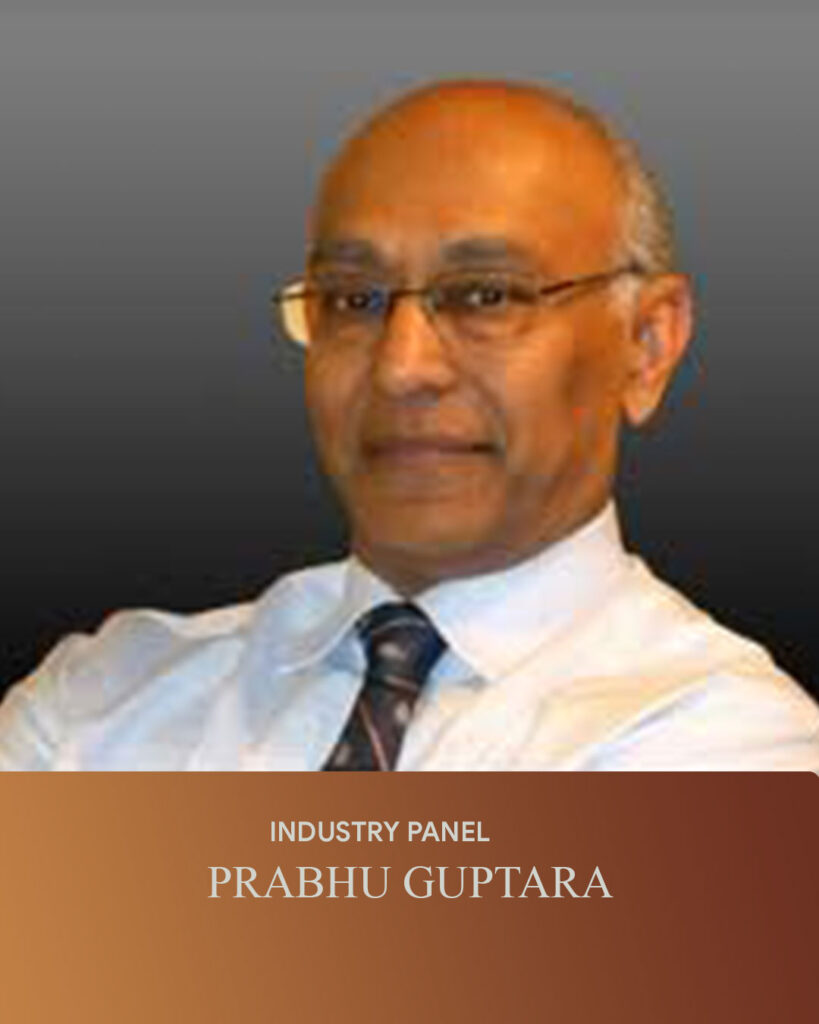
Prabhu Guptara
The founder of Salt Desert Media Group Ltd., Prabhu Guptara finds his heart still very involved with the country of his birth, India, though his head and his professional work focus on global challenges.
For many years, he organised Think Tanks for the largest bank in the world, covering political, economic, social, and technological challenges as well as opportunities which were perceived to have potential for substantial impact on the bank’s performance.
From much earlier than his work for the bank - as well as after his retirement from that position in 2011 – he’s worked as a Boards consultant, as a university teacher, as an independent journalist and broadcaster, and as an organiser, chair and contributor to strategy and leadership events.
That rich and unusual multi-faceted experience informs the publishing programme of Salt Desert Media, which started when he was 71 years old, in memory of his late wife.
Pippa Rann Books & Media, the first imprint, has so far published work covering ageing, business, fiction, memoir, poetry, politics, satire, social reform, and spirituality.
In 2022, he started the second imprint, Global Resilience Publishing – which, as the name suggests, focuses on global challenges.
Salt Desert itself focuses on distribution - both of the publications of its two imprints, and of publications from other entities.
Saturday, 14 November 2026
04.00 – 04.50 PM
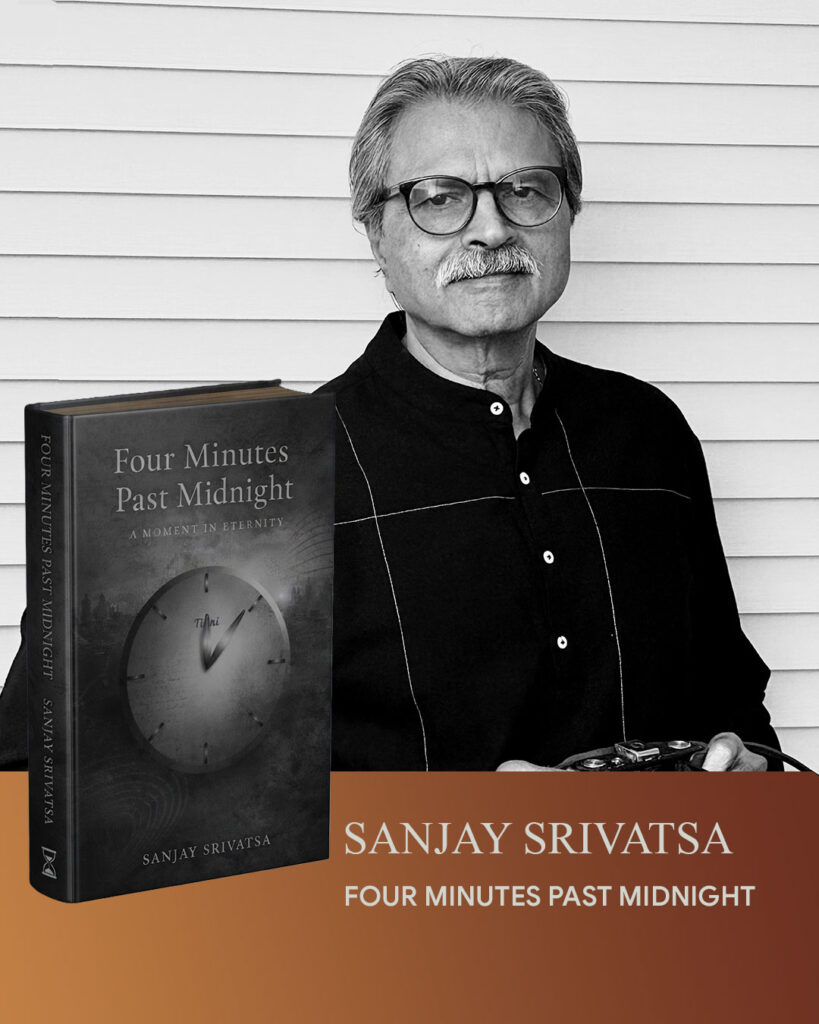
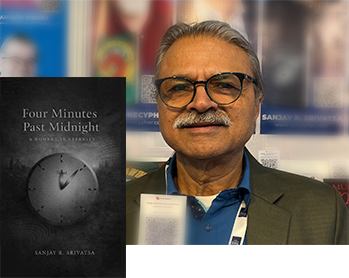
Sanjay Srivatsa
Book Talk: Four Minutes Past Midnight: A Moment in Eternity
Sanjay Srivatsa, born in India graduated with a BS in Chemical Engineering, ACTech Madras and MS ChE, IIT Chicago. He joined Nalco in 1979 as a Researcher and was promoted to Group Leader in 1984. Sanjay earned Researcher of the Year awards in 1981 and '82. In 1986, he was promoted to Market Development Manager for the Light Industry Market. In 1989, Sanjay was awarded Marketer of the Year. In 1991 Sanjay joined Sales and was promoted to District Manager in 1997 after successive years of sales accolades, achieving 'All Pro' status, District Salesman of the Year as well as Chairman's Club award. In 1998, Sanjay was promoted to General Manager and Country Manager of Nalco India. Sanjay returned to the US in 2002 retiring from Nalco in the subsequent year. In the next 8 years, Sanjay worked for Tyco (Earthtech), Ecovation and GWE developing his skills in Anaerobic Design and infrastructure management. In 2011 Sanjay returned to Nalco to develop Integrated Water Management services focusing on clients' sustainability goals. After retiring from Nalco (now an Ecolab company) in 2020, Sanjay joined Solecta as Vice President offering process membrane solutions 'Co-Creating' sustainable and disruptive applications. Today Sanjay runs a consultancy Kisan Organics LLC, to help industry improve carbon, water, energy
footprints, providing technical/Capex risk assessments. For his work in facilitating a remote IIT campus in Bangalore, India, Sanjay was awarded the International Alum of the Year in 2004. Sanjay served on the board of ISBT (Bevtech) since 2021-25. Sanjay enjoys composing music, producing and public speaking. He is the author of two books, the prior published in 2010: A 'Mischievous Chicken'.
BOOK
This Novel is the culmination of my father's undisclosed wartime story. From 1941 to 1947, my father, K.R. Srivatsa, born 1920 as a citizen of Colonial India, escaped concentration camps in occupied Singapore after it was bombed in '41 and secreted passage to Japan. As a Radio broadcaster in Tokyo for the Indian Independence League (IIL), he witnessed live, the bombings in Singapore and Japan. He later served with the US Eighth Army (SCAP Occupational Services) in Tokyo and Okinawa. He was wrongfully captured by the British accusing him of false propaganda and co-conspiracy and was repatriated to Calcutta to be sentenced to death. The book engages the reader spanning two centuries documenting his ancestral life. It is targeted towards enthusiasts of WWII, conspiracy buffs, and Indian Independence efforts with associated intrigues. Further, the book is a cultural reference delving into the various religious and traditional practices part of the rich fabric in Southeast Asia, China and Japan today. As a narrative of the protagonist, the story provides the reader an opportunity to appreciate how these cultures existed and evolved during that tumultuous period.
In conversation with
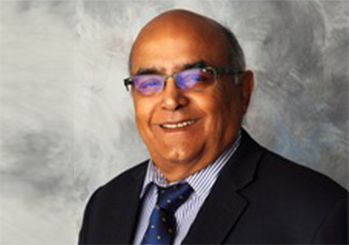
Col. Virendra Tavathia
Born in a village near Ghaziabad in 1955, Col. Tavathia lost his father at the age of two. He began his education in Pilani, Rajasthan, but returned to his village after completing Grade 3 due to financial and family circumstances. From an early age, he helped his mother with farming and began ploughing fields at 11. From Grades 4 through 8, he walked up to three miles each way to school. He later attended Modi Science & Commerce College in Modi Nagar, cycling 12 kilometers each way. After earning a scholarship through a competitive examination, he completed high school with a first-division result and graduated from Meerut University in 1975 with a bachelor’s degree. In college, he excelled academically and represented his institution in hockey, cricket, athletics, and volleyball. While pursuing a master’s degree in chemistry, he was selected for the Indian Military Academy (IMA) in Dehradun, which he joined in January 1976. Soon after, he was selected for the Academy’s cricket team. He graduated from the IMA on 11 June 1977. Although strongly recommended for the Corps of Signals because of his aptitude for physics, he chose the infantry and was commissioned into the 2nd Battalion, the Rajputana Rifles.
After completing the Young Officers Course, including commando training, he joined his battalion and helped it win numerous sporting and professional competitions. Col. Tavathia valued service in field stations and consistently volunteered for field postings. When his unit moved to the Poonch area of Jammu and Kashmir, he volunteered for the advance party. His first experience of insurgency operations came in the aftermath of Operation Blue Star. Drawing on his farming background, he understood the challenges faced by the local community and advised his Commanding Officer against imposing a curfew in their area of responsibility. As a result, markets remained open, farmers were able to sell their produce, and not a single incident occurred in their sector during the battalion’s six-month tenure in Punjab. The battalion earned the trust and goodwill of the local population.
In 1985, as a Captain, he was posted as an instructor at the Infantry School in Mhow, where he served on the team that established the school’s Anti-Tank Missile Group. He passed the Staff College examination in 1987, attended the Defense Services Staff College in Wellington in 1988, and graduated with an Instructor’s Grading. He was then appointed Brigade Major in the Sri Ganganagar area, where he served for two years and seven months under three Brigade Commanders. In January 1992, he rejoined his battalion and was given command of Charlie Company, which was then considered unfit. Within four months, the company won every sporting and professional competition. It later secured the first victory of the Kargil War at Tololing under the late Major Vivek Gupta, MVC (Posthumous). When offered a choice between a peace posting in Kolkata and an active insurgency posting in Kupwara district, Kashmir, he chose the latter and voluntarily declined a Grade I posting as a Lieutenant Colonel. Under his leadership, the unit excelled in operations in Kupwara, where he also planned and executed one of the Army’s most successful civic-action events in Kalaruch village. In 1996, he was given command of his battalion at Gwalior, promoted to Colonel. He also received his U.S. Green Card at the same time. During his command, the battalion won the regimental championship and numerous sporting and professional titles at the formation level. On 17 June 1998, he took premature retirement from the Army and moved to the United States in October 1998.
After moving to the United States, he held several positions before entering the insurance industry in May 2003. In 2005, he was one of 19 individuals selected by Prudential Financial to manage an independent office. In 2009, he resigned from Prudential and founded Amogh Associates. In 2010, his business partner, Ms. Seema Jagtiani, a respected financial professional and valued associate, joined the company.
In January 2011, Col. Tavathia and Ms. Seema Jagtiani founded the Shradhaa Foundation, an organization dedicated to supporting the widows and children of soldiers holding the rank of Havildar or below. The foundation has assisted numerous families across India and continues its work. In 2012, he returned to India to organize ex-servicemen from his battalion. Since then, these veterans have met annually at different locations and have supported one another financially, professionally, and socially. Col. Tavathia takes pride in serving soldiers and believes that their sacrifices can never be fully repaid. He considers it a duty to support those who follow orders without hesitation, often at great personal risk. In his view, such loyalty is priceless, and society must stand behind those who gave their today for our tomorrow.
When the family of a former Prime Minister of India instituted the “Jai Jawan Jai Kisaan” Award for the Indian diaspora in the United States, Col. Tavathia became its first recipient from the Indian diaspora in the country.
Saturday, 14 November 2026
04.00 – 04.50 PM
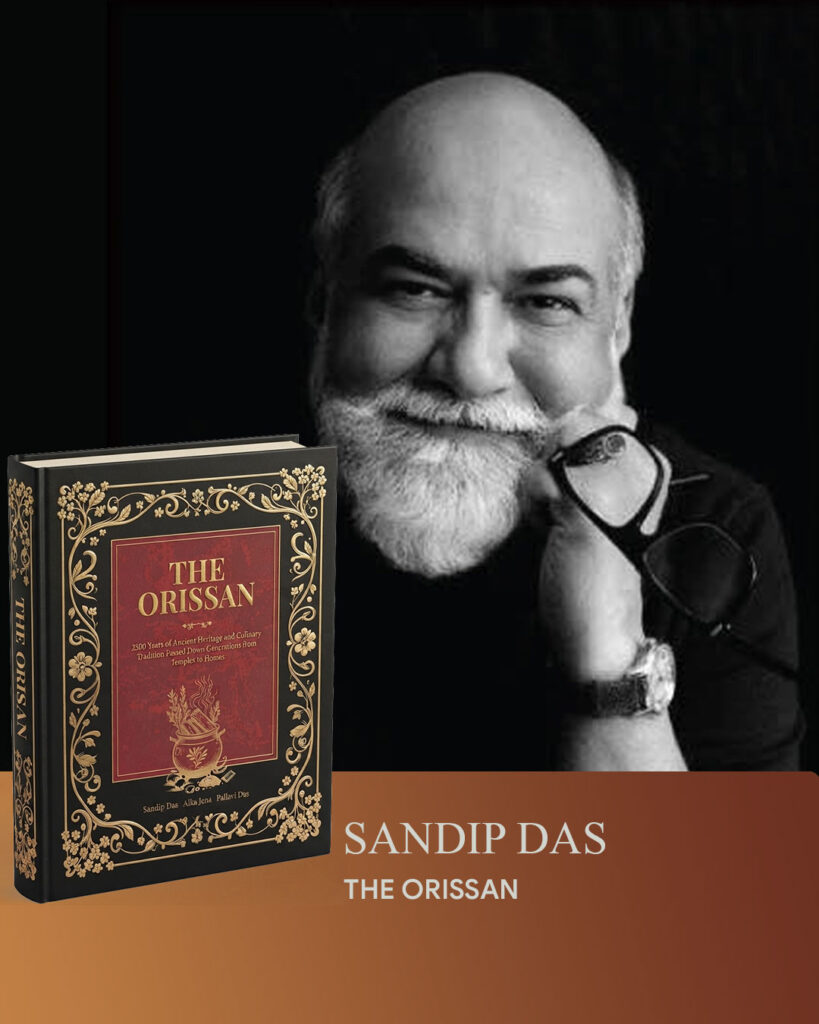
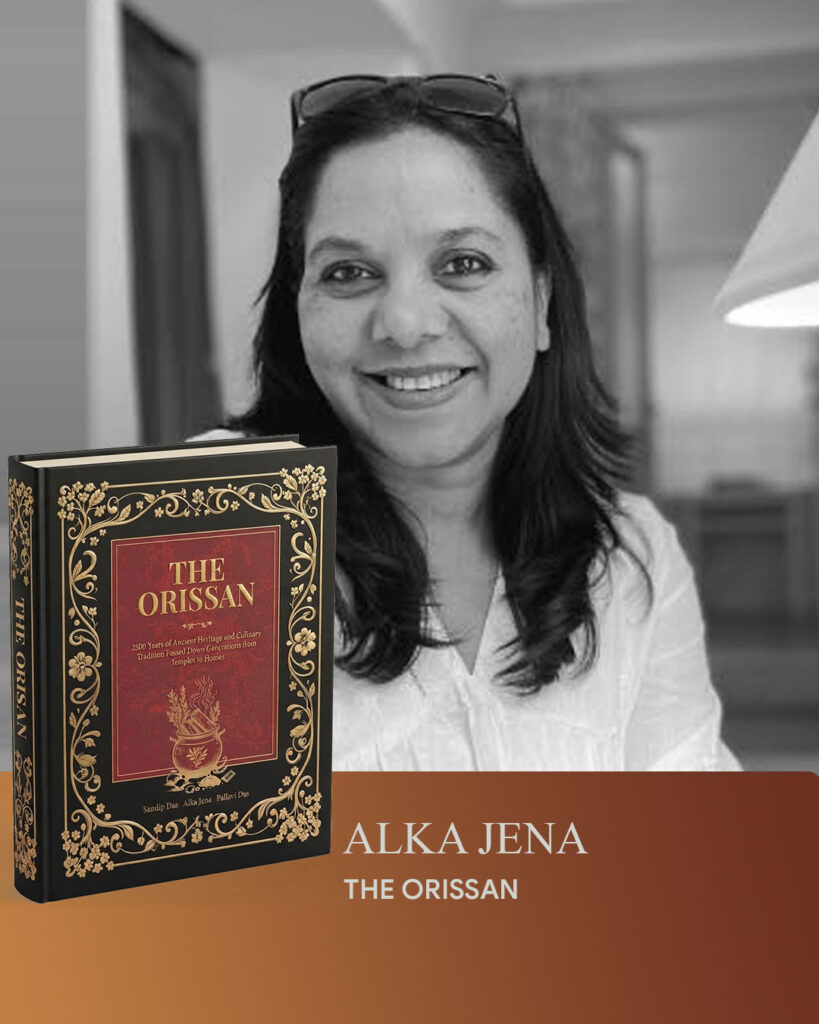
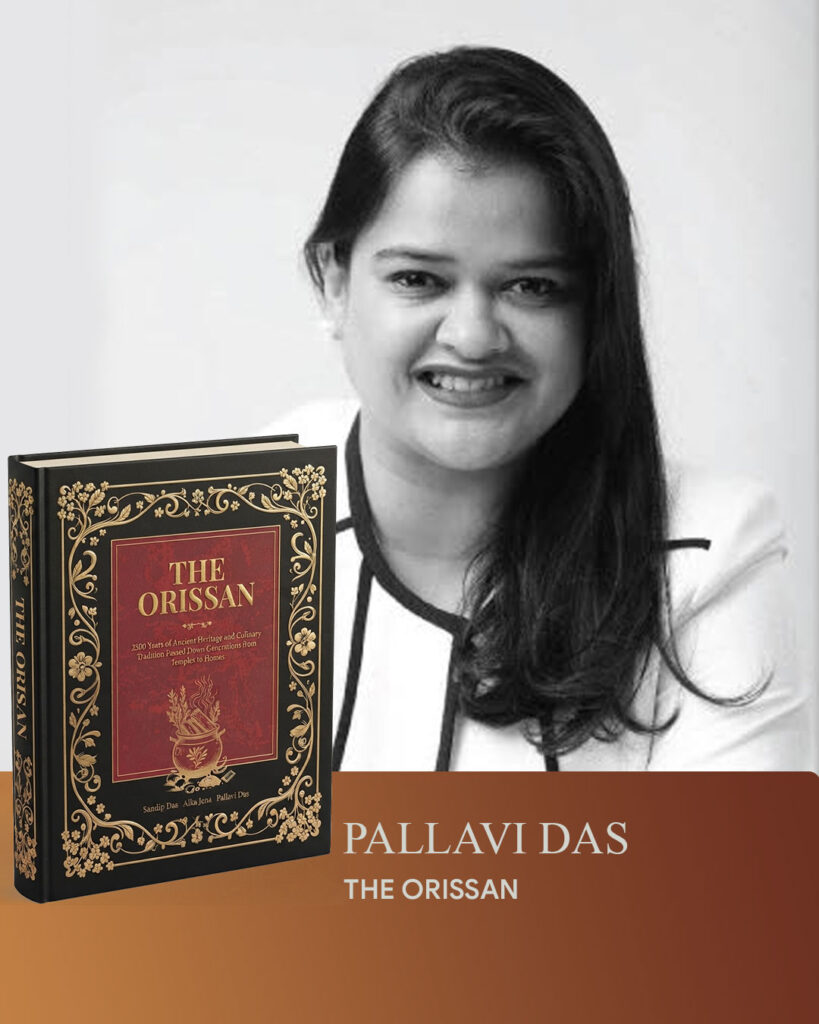
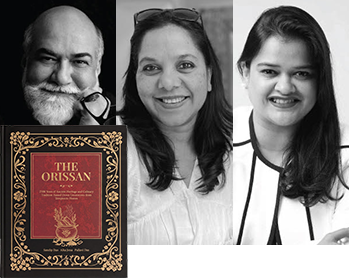
Sandip Das, Alka Jena, Pallavi Das
Book Talk: The Orissan
Sandip Das lives in Gurugram. He has had a distinguished corporate career spanning over three and a half decades across telecommunications, automobiles, and consumer durables. He was a decorated CEO of Hutchison Essar Telecom, Maxis Communications Berhad, Malaysia and Reliance Jio, having worked across geographies internationally. Currently he sits on the boards of listed companies and is a senior advisor to London-based global consultancies. He has a mechanical engineering degree from the National Institute of Technology, Rourkela; an MBA from Faculty of Management Studies, University of Delhi; and an AMP from Harvard Business School, Boston. He is an avid reader, writer, sports enthusiast, and an eminent corporate public speaker, with active interest in literature, arts, music, photography, cartography, history, and technology.
Alka Jena is a Bhubaneswar-based food writer, photographer, and stylist. She is recognized for her efforts in preserving and promoting Odisha’s culinary heritage. Through her blog CulinaryXpress and food pop-ups across India, she brings forgotten recipes and everyday traditions to modern tables. Her storytelling blends heritage with heart, making food not just a meal but a memory. Growing up, she discovered that recipes are more than instructions; they are stories of love, patience, and resilience passed down through generations. With her lens and words, she captures this essence, reviving seasonal rituals, festive dishes, and everyday meals with equal reverence. Beyond the kitchen, Alka is a senior officer from the Odisha Planning Service, currently serving as deputy director in the Planning and Governance Department, Government of Odisha. With over twenty-five years of experience in public policy and development, she combines her professional insights with her love for food to create a unique voice, one that connects tradition with progress, and heritage with hope.
Pallavi Das lives in New York as a freelance communication strategist and brand consultant, and is part of associate faculty at Columbia University in New York. She has a Bachelors in Fine Arts (BFA) degree from the Rhode Island School of Design (RISD), Providence, USA, majoring in film, animation and video, following which she graduated with a Master of Science (MS) degree from the School of Professional Studies (SPS), Columbia University in strategic communications. She has worked with Huffington Post New York, Leo Burnett, OYO, Born, and NDTV, where she was a breaking news reporter. Pallavi is a gifted writer, artist, photographer, public speaker, and singer.
Book
In the cradle of India’s eastern coastline lies a land where civilization learned to pray through food. Odisha, or ancient Kalinga, has witnessed dynasties rise and tides retreat, yet its essence endures in the quiet dignity of its kitchens.
The Orissan traces this unbroken lineage of taste and tradition. Each recipe is a fragment of history, born in temple offerings, royal feasts, and humble hearths, carried forward by generations who understood that nourishment is both art and devotion. Interwoven with personal recollections, myths, and forgotten lore, these pages become a chronicle of identity―a journey through time where flavours are the language of memory and every meal a hymn to the land.
To open this book is to rediscover an unsung state―glorious, graceful, and eternal.
Book Reviews
“A fascinating and immersive exploration of Odisha’s culinary culture, where heritage is deeply interwoven with food traditions.” Padma Bhushan Pratibha Ray
“A proud moment for Odisha—this premium edition carries our traditions to a global readership with dignity and sophistication.” Shri Kanak Vardhan Singh Deo
“To call it a book would be gross injustice. Great body of work.” Chef Sanjeev Kapoor
“The Orissan is a unique kind of cultural autobiography that charms, entertains, and informs about the finest things in life.” M.J. Akbar
Beautiful Celebration of Odisha’s Heritage. Deeply Researched.
“A beautiful celebration of Odisha’s heritage, culture, temple traditions and culinary heritage, beautifully bringing history alive through food. A wonderful book for anyone interested in Indian history, culture, food and heritage.” Divya Ohri
Gorgeous heirloom quality of a book.
“A gorgeous book with fantastic commentary, storytelling, visuals and selection of dishes. The research is well done and beautifully presented—a rich and heritage-filled coffee table book. So proud of this book. Congratulations to the team!”A. Mishra
A magnificent tribute to Odisha’s culinary soul
“The Orissan is much more than a cookbook—it’s a beautifully crafted cultural archive bringing together history, temple traditions, regional food, folklore and authentic recipes with remarkable depth and elegance.” Sameer
For every foodie, aesthete and lover of India
“The Orissan deserves every glorious word of accolade it is getting. A beautiful book tracing Odisha’s rich civilization through its unique cuisine, with delightful recipes, stories, exceptional production quality and attention to detail.”
Nilima B
In conversation with
Moderator Bio
Moderator Bio
Saturday, 14 November 2026
05.00 – 05.50 AM
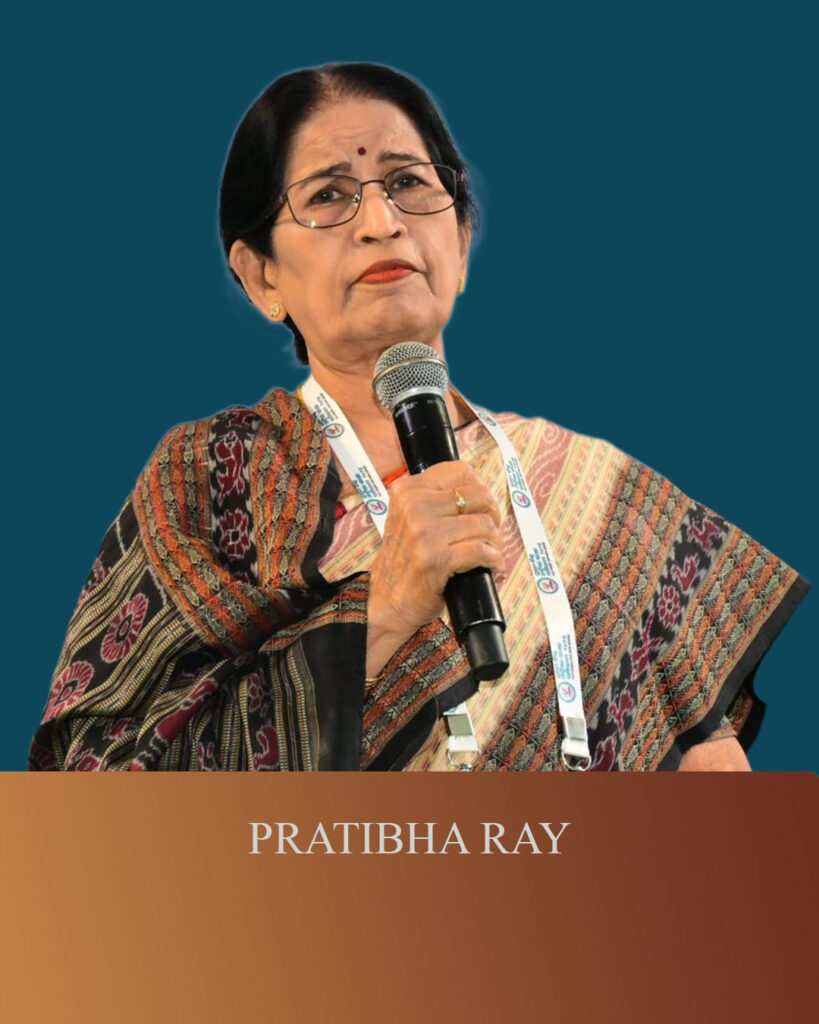
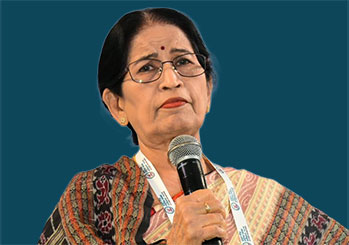
Pratibha Ray
Book Talk: Book Name
Padmabhushan Dr Pratibha Ray was recently conferred with the prestigiour Fellowship of Sahitya Akademi,
the highest and rare honour accorded to the literary immortals of Indian literature which highlights theceaseless sadhana, signal creative contribution and the readership and recognition across generations.
She was conferred with the Fellowship in an exclusive ceremony by Dr Madhab Kaushik, President ofSahitya Akademi at Sanskruti Bhawan in Bhubaneswar.
At any point of time not more than 21 living litterateurs hold this Fellowship in India.
From Odisha she is the eighth writer and the first woman writer to be honoured with this Fellowship.
A towering figure in Indian literature, her extraordinary creative journey—marked by profound storytelling,deep humanism, and an unwavering engagement with society—has touched countless hearts acrosslanguages and generations. From redefining myth through a contemporary lens to giving voice to thesilenced and marginalized, her body of work stands as a luminous testament to literary excellence andcourage.
The Sahitya Akademi Fellowship, the highest recognition bestowed by the National Academy of Letters, isreserved for the “immortals of Indian literature”—a rare honour limited to only a few living legends at anytime. That she now stands among them is both momentous and deeply deserved.
Pratibha Ray occupies a singular position in modern Odia and Indian literature. Over more than fivedecades, she has transformed the novel and short story into vehicles for interrogating gender, caste, tribalidentity, mythology, history, faith, ecological catastrophe and the moral dilemmas of contemporary life. Herimportance lies not merely in the size of her oeuvre or in the distinction of her awards, but in her ability totake experiences rooted deeply in Odisha and make them speak to universal questions of dignity, freedomand human identity.
Recent authoritative profiles describe her corpus as extending to 24 novels, 32 collections of short stories,12 travelogues, two poetry collections, five essay collections, an autobiography, two books of Children'sLiterature and a study of five primitive tribal communities of Odisha.
Her literary achievement has been recognised by virtually every major level of Indian literary and civilianhonour: the Odisha Sahitya Akademi Award, Sarala Award, Moortidevi Award, Sahitya Akademi Award,Padma Shri, Bharatiya Jnanpith Award, Padma Bhushan, and numerous national lifetime-achievementrecognitions. The Government of India formally conferred the Padma Bhushan in 2022 for Literature andEducation, and in 2024 Literature Live! Mumbai honoured her with its Lifetime Achievement Award.
In conversation with
Bhavani Parmeshwar
Moderator Bio
Saturday, 14 November 2026
03.00 – 03.50 PM
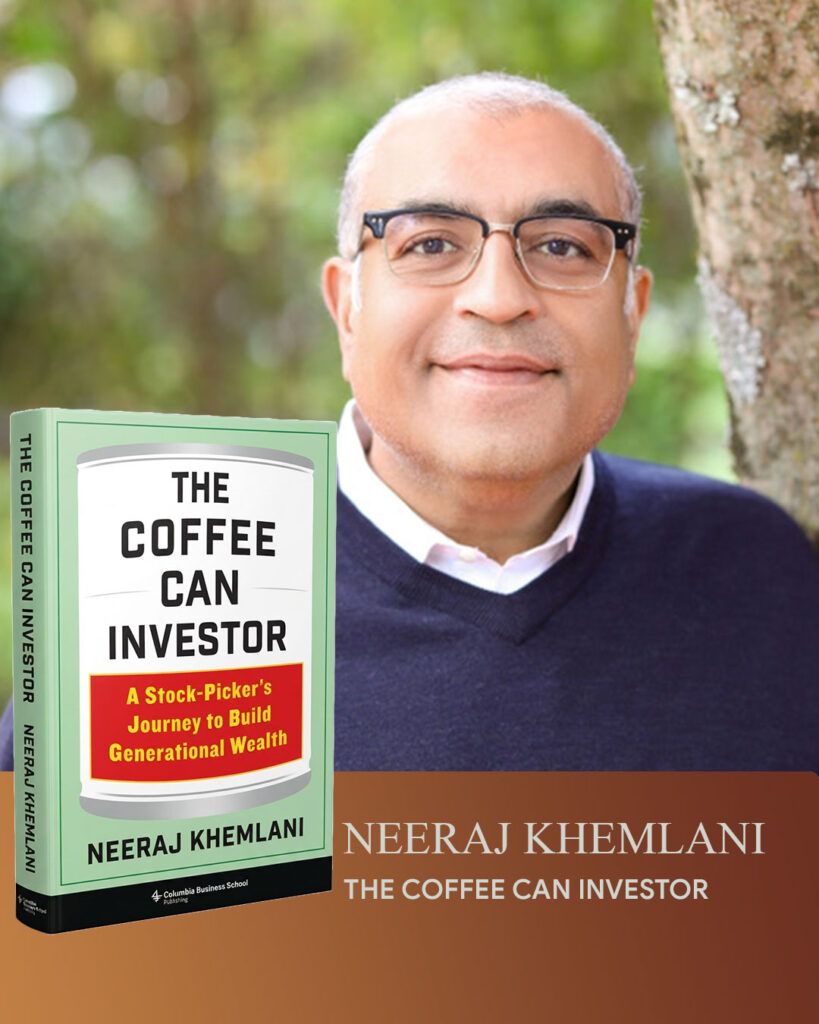
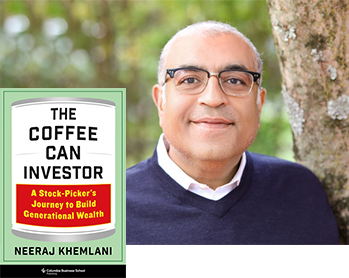
Neeraj Khemlani
Book Talk: The Coffee Can Investor
Neeraj Khemlani is former president of CBS News, overseeing 60 Minutes, 48 Hours, Evening News, CBS Mornings, Sunday Morning & Face the Nation. He managed Hearst's cable partnerships with Disney (ESPN and A&E Networks) and later its newspapers. Khemlani ran Yahoo! News and editorial for Yahoo! Finance. He produced award-winning stories for 60 Minutes II, 60 Minutes and ABC News. He is married to author and former ABC News correspondent, Heather Cabot, and they are the proud parents of college-aged twins, Samantha & Ian.
Book
Here's the text edited to under 1000 characters: --- What if you bought a handful of stocks and left them alone — like stashing valuables in a coffee can? Pick the right ones, and you might wake up with life-changing wealth. Neeraj Khemlani introduces this philosophy through portfolio manager Matt Ankrum, who studied 100-baggers — stocks that multiplied a hundredfold over decades — searching for common traits. He now hunts tomorrow's breakout companies, planning to gift his children a portfolio worth half a billion dollars. *The Coffee Can Investor* lays out Ankrum's process, his stock picks, and the power of compounding and patience. It reveals that many 100-baggers are business-to-business companies, not just consumer-facing names. Khemlani also shares his own coffee can portfolio built for his kids. For anyone who wants to invest in enduring companies for the long term.
Book Reviews
"The Coffee Can Investor is a gem of a book that combines good journalism with strong storytelling. It’s an incredible story of two fathers’ love for their children and their desire to leave them a future as big and bright as the Texas sky." Dan Rather, journalist and former anchor of CBS Evening News
"Don’t view The Coffee Can Investor as telling you what to think, but rather as providing an example of how to think. It describes a logical process for stock selection, to be applied through rigorous implementation and ultra-long-term investment in a limited number of holdings. These are exactly the right elements, and for that reason I heartily recommend Neeraj Khemlani’s book to any would-be stock-picker. There’s just one more thing, though: The process has to prove out. This one just might." Howard Marks, cofounder and cochairman, Oaktree Capital Management, and author of The Most Important Thing: Uncommon Sense for the Thoughtful Investor and Mastering the Market Cycle: Getting the Odds on Your Side
"A fascinating approach to growing wealth through the stories of companies that are expected to achieve outsized investment returns. Financial analysis and storytelling make this a must-read for investors."
Tapan Bhat, former president and general manager, Yahoo Finance
"This is a wonderful and incredibly useful book. When you turn the final page, you will be awed by the wisdom of one modest Kansas City dad, you will learn valuable lessons about how to invest, and you will admire Neeraj Khemlani for vividly sharing this tale."
Ken Auletta, New Yorker writer and best-selling author of Googled: The End of the World As We Know It
"It’s a great book. It’s a fun read. Buy it and read it."
The Brian Memorandum

In conversation with
Mathew Veedon
Mathew Veedon is a Managing Director at Accordion with over 25 years of consulting, operating, and investing experience across a broad range of industries including consumer goods, healthcare, and technology. He focuses on high intervention situations, turnarounds and major transformations for portfolio companies of leading private equity firms. He has worked with senior executives on cost reduction, business reorganization, merger integration and synergy estimation.
Before joining Accordion, Mathew was the CFO for Corsicana Mattress Company, where he was involved in acquiring a competitor, restructuring the balance sheet and effecting a change of control. At Keyrock Partners, he focused on early-stage growth companies to unlock value with IoT, Cloud and Blockchain technologies. Mathew was also a Senior Advisor to Quest Turnaround advisors and a partner at Redding Consultants. Prior to joining Redding, Mathew was a Principal of NGV Partners Fund LLC, a seed stage technology fund and portfolio manager of Sachem Ventures. Mathew began his career with positions at Arthur Andersen and Accenture.
Mathew graduated from Sydenham College in Mumbai, India. He is a Chartered Accountant and holds an M.B.A. in Finance with a Strategy concentration from Yale University. He lives in New York and is an avid runner, who has completed five marathons.

Saturday, 14 November 2026
10:00 – 10:50 AM
Rachel Gurjar
Book Talk: East to East: Recipes and Stories from Mumbai to New York
Rachel Gurjar is a chef and food writer from Mumbai, India, currently based in Brooklyn, New York. After attending the Culinary Institute of America, she worked in numerous New York City restaurants, including ABC Kitchen, then was a food editor at Bon Appétit. She now works as a freelance writer and recipe developer. Her work has been featured in Bon Appetit, Food52, The Kitchn, and Forbes, among other outlets, and she has appeared on Good Morning America and NPR.
A joyful celebration of the immigrant experience told through the universal language of food. Brimming with raw, beautiful storytelling and 101 Indian-inspired recipes that draw on a global pantry and burst with flavor, this immersive cookbook will fill your heart and table.
"East to East is more than a collection of recipes. It’s a reclamation, a love letter, and a sharp meditation on what it means to build a life between cultures. Rachel’s food feels grounded in tradition yet alive in the present, inviting us to cook with curiosity, care, and a great deal of pride." ―Andy Baraghani, New York Times bestselling author of The Cook You Want to Be
Mumbai-raised, New York City–based chef Rachel Gurjar shares the triumphs, hardships, and delicious discoveries that come from leaving your home and navigating a foreign country. Through inventive dishes that seamlessly blend the foods of her childhood and travels with beloved American staples, Gurjar’s cooking showcases the tantalizing possibilities that arise when cultures collide. Recipes for dishes ranging from condiments, snacks, and breads to entrees, drinks, and desserts include:
- Salmon Red Kari
- Paneer with Sungold Tomatoes and Basil
- Chicken Kebab Caesar Salad
- Shrimp Biryani with Pineapple Raita
- Spicy Butter Masala Pasta
- Dirty Chai Espresso Martinis
- Cardamom Sticky Toffee Cake
Stunning photography enlivens these recipes and transports you to the streets and stoops of New York City and the beaches and markets of Mumbai. Written with honesty, passion, and vulnerability, East to East is both a tribute to the immigrant experience with all its highs and lows and a universal tale of resilience, courage, and identity. With this
sumptuous guide, Rachel’s food—creative, balanced, complex-tasting, and always appealing—comes to your kitchen.
HIGHLY COOKABLE RECIPES: Discover accessible dishes perfect for weeknight dinners and weekend hosting. This game-changing cookbook brings Indian food into your repertoire with a fresh spin and approachable instruction.
FLAVORFUL FOOD: From Sweet and Sour Pomegranate Chex Mix to Cheesy Masala Eggs, Lamb Keema Taco Bowls, Cardamom Sticky Toffee Cake, and Haldi Doodh, these 100+ Indian and Indian-inspired recipes draw on global flavor.
"Gurjar writes from a reflective, earnest place about navigating the two cities―the significance of cultural preservation, and how cooking brought her closer to herself. This intimate storytelling sits alongside a range of recipes: traditional family ones and thoughtful riffs on American classics.” ―Bon Appétit
"Good cookbooks will inspire you to get into your kitchen and start cooking. Great cookbooks will transport you to places you have never been, and, suddenly, you can’t be anywhere else. Rachel’s cookbook, though, has done something unprecedented: It has energized me to see the world in a new way, to take my palate (and my pantry) on an adventure, and to spend more time getting to know the people behind the food I am cooking. As I cook through these recipes, the scents and the stories swirl together to make something unbelievably satisfying." ―Dan Pelosi, New York Times bestselling author of Let's Eat and Let's Party

In conversation with
Tanya Sichynsky
Tanya Sichynsky is a Food and Cooking editor at The New York Times and the author and host of The Veggie, a YouTube series and weekly vegetarian newsletter.
New York Times Cooking is the digital source for more than 24,000 of the best recipes from The New York Times, for home cooks at every skill level. Cooking subscribers get access to the best-in-class app, including tools for recipe organization and shopping lists, and weekly newsletters that offer new recipes and smart kitchen tips from New York Times editors.
Book
This collection of 100 recipes from NYT Cooking invites you to discover just how bold and satisfying vegetarian dishes can be—for weeknight cooking, celebrations and all the bites in between
Have you ever feared that you would still feel hungry after a vegetarian feast? Tried to cook for meat lovers… without the meat? Craved a more vibrant vegetable-packed breakfast worth jumping out of bed for? Whether you’re a devoted vegetarian or expanding your palate, Veg Everything (Ten Speed Press | September 15, 2026) will change how you think about plant-forward meals.
Curated by Tanya Sichynsky, author of the popular NYT Cooking newsletter “The Veggie,” Veg Everything serves up not only culinary inspiration (with mouthwatering photos) but also tips and meal plans to make vegetarian cooking feel as easy as it is delicious. As Tanya says, “The decision to eat more vegetables does not confine you to a life of side dishes. It opens the door to a multiverse.”
Enjoy every bite of 100 standout NYT Cooking recipes, grouped by themes: hearty breakfasts and finger foods, seasonal salads and soups, meatless mains and party showstoppers. Discover irresistible meals anchored by a humble can of beans; shape-shifting tofu, from silky to crispy; meal-enhancers like broth and dressings; and vegetable-packed (and still decadent) pastas.
Think Cauliflower Shawarma with Tahini for a weeknight dinner, with leftovers for lunch; Spicy Tomato Beans and Greens to work magic with pantry staples; Creamed Greens Pot Pie on a holiday table; or a Golden Potato and Greens Soup that turns crisper-drawer veggies into the main event.
Featuring time-tested recipes and expert guidance from trusted writers Melissa Clark, Eric Kim, Yewande Komolafe, Andy Baraghani, Hetty Lui McKinnon and more, Veg Everything is an enthusiastic celebration of vegetables—for the veg-forward, the veg-skeptical and everyone in between.
SUNDAY PROGRAM
Sunday, 15 November 2026
11.00 – 12.00 PM
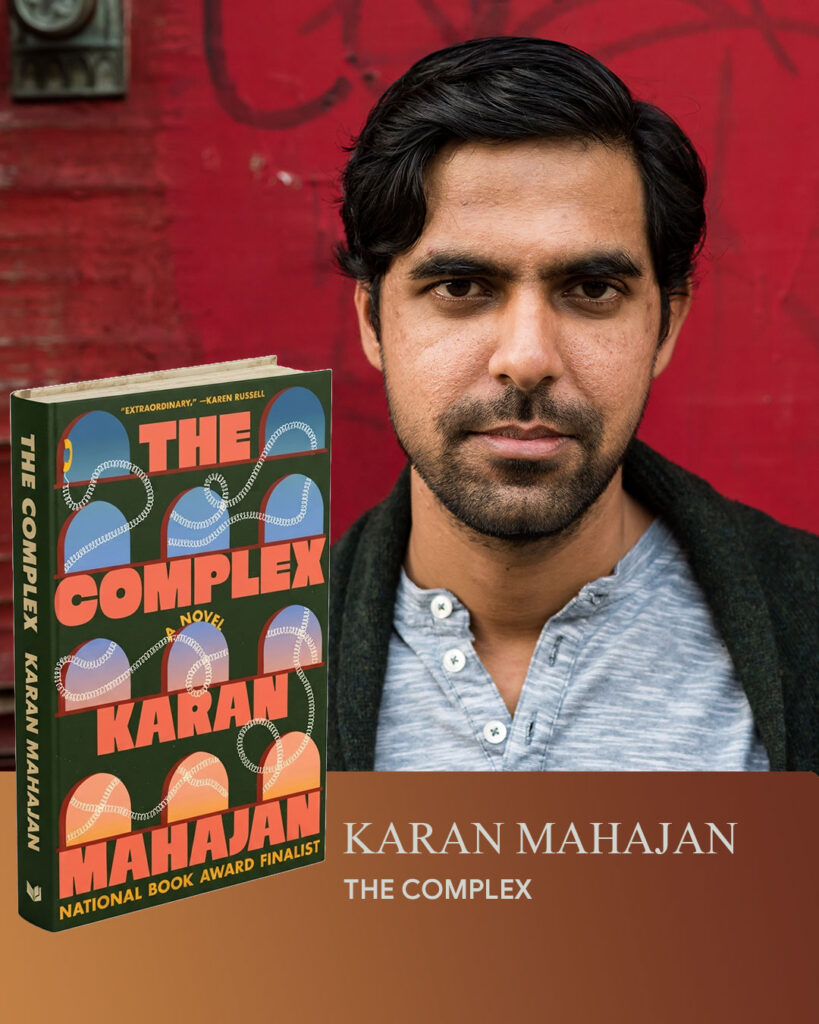
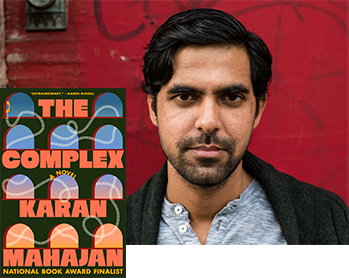
Karan Mahajan
Book Talk: The Complex
KARAN MAHAJAN is the author of The Association of Small Bombs, which was a finalist for the National Book Award, winner of the NYPL Young Lions Fiction Award, and named one of the 10 Best Books of the Year by The New York Times Book Review. His debut novel, Family Planning, was a finalist for the International Dylan Thomas Prize. He has been selected as one of Granta’s Best Young American Novelists, and his writing has appeared in The New Yorker, The New York Times, Vanity Fair, The New York Review of Books, and other venues. He is an associate professor in Literary Arts at Brown University.
Book
In a sprawling complex in Delhi, the sons and daughters of SP Chopra, one of India's political architects, live together vying for influence in a family shaped by the great man's legacy. By the late 1970s, his descendants are scrambling to define their own futures in a still-young nation on the brink of transformation.
Sachin Chopra leaves for America, with his bride Gita following not long after, as the newlyweds are eager to forge their own lives beyond the pressures of the family compound. Yet Delhi remains an inescapable force, one that keeps pulling them back, even as Gita is menaced by Sachin’s predatory uncle, Laxman. A man of restless ambition, Laxman ascends through the ranks of a rising Hindu nationalist movement, caught between his political aspirations and his personal transgressions. Meanwhile, Vibha, his sister, tries to keep the peace and the reputation of the family intact even as she wrestles with her own exile.
As India erupts in violence and long-buried secrets come to light, the embattled Chopras must reckon with the cost of power, the weight of tradition, and the shifting nature of love and allegiance. Equal parts brilliant family saga and piercing political drama, The Complex is a virtuosic novel of revenge and redemption, ambition and undoing, loyalty and love, by one of the most lauded voices in contemporary fiction.
In conversation with
Yoshita Singh
Moderator Bio
SESSION2 Sunday – 15 November 2026
01.00 – 02.30 PM
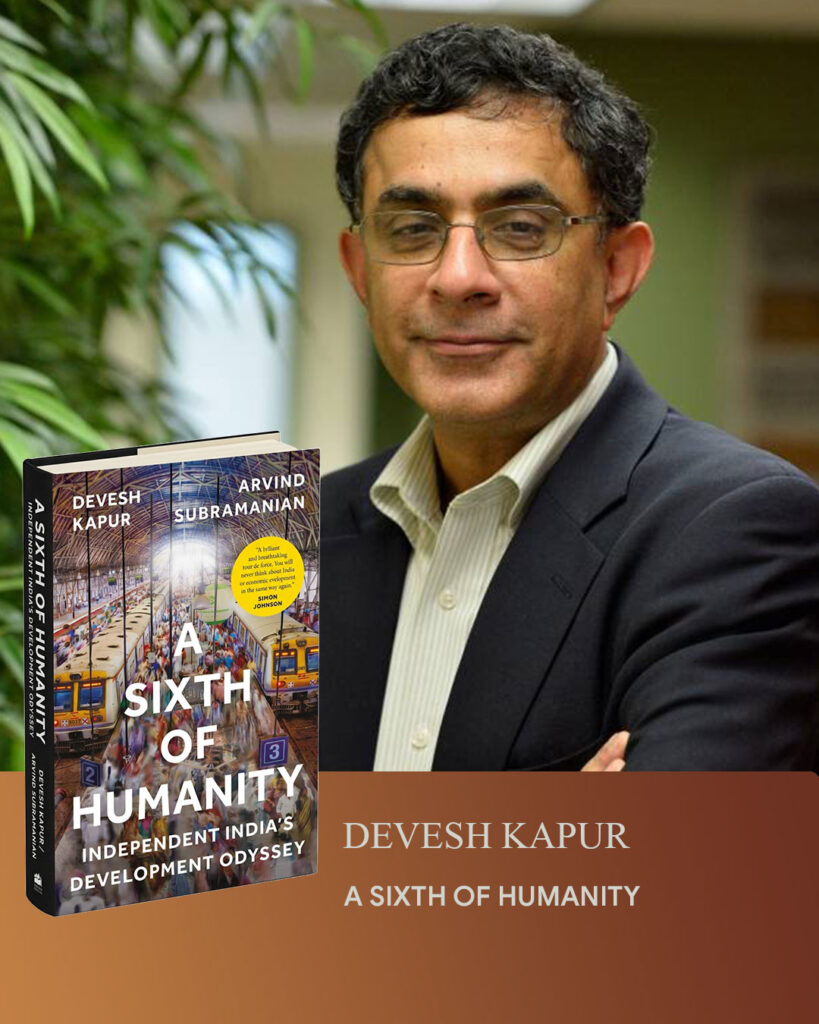
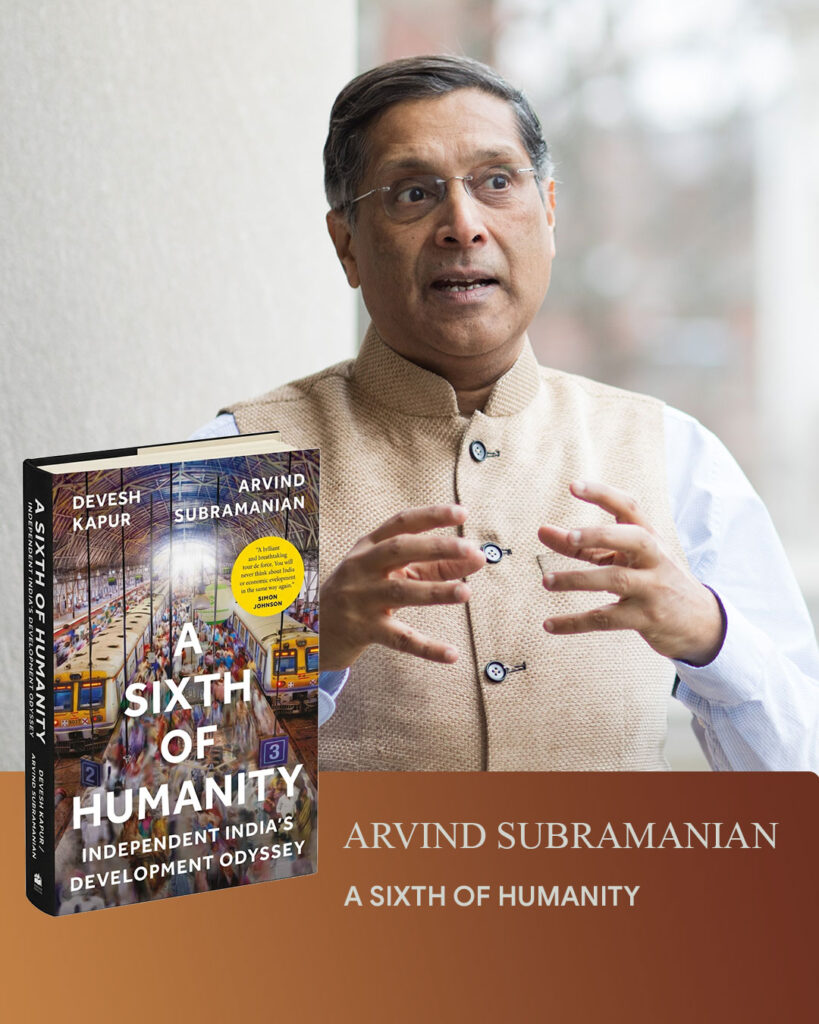
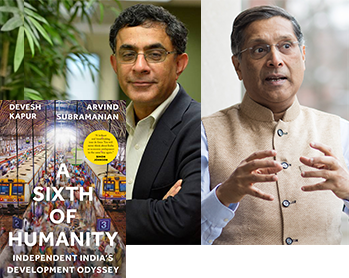
Devesh Kapur and Arvind Subramanian
Book Talk: A Sixth Of Humanity: Independent India’s Development Odyssey
Devesh Kapur is Starr Foundation Professor of South Asia Studies at the School of Advanced International Studies at Johns Hopkins. His earlier stints include the Madan Lal Sobti Chair for the Study of Contemporary India and Director of the Center for the Advanced Study of India (CASI) at the University of Pennsylvania and the Frederick Danziger Associate Professor of Government at Harvard.
His research has focused on five broad areas that examine the political and institutional determinants of economic development: international financial institutions; political and economic consequences of migration; the political economy of India; governance and public institutions; and higher education. He has published more than 100 articles and book chapters and fourteen books including A Sixth of Humanity: Independent India’s Development Odyssey (with Arvind Subramanian), The Other One Percent: Indians in America; Defying the Odds: The Rise of Dalit Entrepreneurs (Random House, 2014); Diaspora, Democracy and Development: The Impact of International Migration from India on India; Give Us Your Best and Brightest: The Global Hunt for Talent and Its Impact on the Developing World; The World Bank: Its First Half Century. He was the lead academic for the World Development 2025: Standards for Development. He also writes in leading media outlets including Financial Times, Foreign Affairs, Foreign Policy, Hindustan Times, Indian Express, Project Syndicate, Time, Times of India, amongst others.
Arvind Subramanian is senior fellow at the Peterson Institute for International Economics (PIIE). Previously, he has taught at Brown, Ashoka and Harvard Universities. He served as the chief economic advisor to the government of India between 2014 and 2018. He currently also advises state governments in India on macro-economic, fiscal and sectoral issues. Foreign Policy magazine named him one of the world's top 100 global thinkers in 2011. His latest book (co-authored with Devesh Kapur), A Sixth of Humanity: Independent India’s Development Odyssey, was a Financial Times book of the year.
As chief economic adviser, his annual Economic Survey of India, became a widely read document on Indian economic policy and development. The 2018 Survey had 20 million views from over 190 countries in its first year of publication. He was closely involved in the design of the nation-wide Goods and Services Tax (GST) and several other policy initiatives. His reflections on his tenure were published as “Of Counsel: The Challenges of the Jaitley-Modi Economy.” His critically acclaimed book, Eclipse: Living in the Shadow of China's Economic Dominance sold over 130,000 copies and was translated into 4 languages.
Book Reviews
On reviews/blurbs, you might want to mention that the book was A Financial Times Book of the Year, 2025, A Project Syndicate book of the year, and has been short/longlisted (results awaited) for three major book awards including the Kamaladevi Chattopadhyay prize awarded by the New India Foundation.
Apart from Nobel-prize winning Simon Johnson's blurb on the front cover, you can chose amongst the following:
An audacious new book about a “precocious” country…”A Sixth of Humanity” is not short, spanning over 600 pages. But plenty of books about America require as many pages to cover a quarter as many people. The author’' accomplishment is all the more remarkable given India’s forbidding complexity. - The Economist
In this ambitious, deeply researched book, coming in at over 750 pages, authors ... provide a definitive guide to the nation’s 75-year development odyssey. In illuminating the structural tensions that define India’s past and present Kapur and Subramanian provide one of the most comprehensive analyses of the country’s development journey to date, with a timely corrective to the caricatures that so often shape outsiders’ views of India’s rise. - Financial Times
A magisterial book - Montek Singh Ahluwahlia, former Deputy Chairman, Planning Commission
Prospective authors who write on India should worry that there is nothing more left to write on because this book has covered almost everything about India and that needs to be said about India. They have done an amazing job in helping us understand India over the last 75 years, providing us answers to questions we normally ask and even provoke questions we didn’t think we could ask. - Duvvuri Subbarao, former Governor, Reserve Bank of India
This book is a truly veritable intellectual achievement, illuminating and educative. It will replace Dréze and Sen as the last great text on Indian development. - Ashutosh Varshney, Sol Goldman Professor of International Studies and the Social Sciences and Professor of Political Science, Brown University
This is really an amazing, monumental piece of work. - Rakesh Mohan, former Deputy Governor, Reserve Bank of India and Chief Economic Adviser, Government of India
In conversation with
Sonal Shah
Sonal Shah has spent her career building and leading institutions at the intersection of public policy, social impact, philanthropy, and journalism. She currently chairs the board of Consumer Reports and is a senior advisor at Results Prism.
Shah was the founding director of the White House Office of Social Innovation and Civic Participation under President Obama and later founded Georgetown University’s Beeck Center for Social Impact and Innovation. She has also led major civic and nonprofit institutions, serving as CEO of The Texas Tribune and as the founding president of The Asian American Foundation.
Earlier in her career, Shah worked across government, technology, and finance, leading global development initiatives at Google.org, working on environmental strategy at Goldman Sachs, and as an international economist at the U.S. Treasury.
Sunday, 15 November 2026
02:00 – 03:30 PM
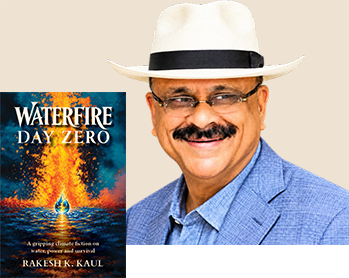
Rakesh Kaul
Book Talk: WaterFire Day Zero
Rakesh Kaul, an Indian Institute of Technology gold medallist, migrated to the US in 1972. He moved to the US to pursue his Master’s program in solar cells at Brown University. He was a Leon Carroll Marshall Fellow at the University of Chicago Graduate School of Business. He helped found the first Chair of India Studies at the University of California, Berkeley, the Center for the Advanced Study of India at the University of Pennsylvania, and the Mattoo Center for India Studies at the State University of New York. He is the author of the bestseller The Last Queen of Kashmir, published by HarperCollins and translated into Hindi, and the critically acclaimed Dawn The Warrior Princess of Kashmir, published by Penguin. His short story, The Last Delivery, was shortlisted for the prestigious Bridport Prize Short Story in 2025. Kaul has had a distinguished business career as a CEO and has held leadership positions at publicly traded US companies. His latest novel, WaterFire Day Zero, is published in India by Vitasta Publications and in the UK by Pippa Rann Books. He serves as Vice Chair of the Indo-American Arts Council in New York City and is an active columnist for leading media outlets www.RakeshKKaul.com
BOOK REVIEWS
“Kaul presents a gripping narrative and a convincing young protagonist… A lively and involving combination of fantasy and cli-fi.” - KIRKUS Reviews
“Jala is The Gaia Redemption …” - Emil Dispenza, Florida, award-winning creative
“WaterFire Day Zero felt like stepping into a river that carries both myth and urgency, moving me through time, across continents, and into the hidden depths of water itself. Rakesh Kaul’s language holds you the way water does: reflective one moment, torrential the next, always moving with a sense of inevitability and wonder. Jala is a heroine whose journey is physical, spiritual, and mythic all at once, a vessel for generations of grief, hope, and transformation. The narrative moves between intimate family moments, sweeping epic landscapes, and the luminous depths of the Water Metaverse, carrying the reader effortlessly across the threshold between the visible and the hidden.” - Kiran Merchant is a multi-hyphenate artist/entrepreneur, an architect turned filmmaker and theater director, based in New York City
“WaterFire Day Zero is a wonderfully original new novel by Rakesh Kaul with a story that works on many levels. Many readers will enjoy it as a fast-paced thriller set in the near future, but its deeper layers address the very nature of our worldly experience and knowledge. The story has epic dimensions, centred on humanity’s survival amid an impending climate catastrophe and the conflict between good and evil, and it deftly weaves mythic elements in which the past informs the present. The name of the book’s principal character simultaneously recalls two of the five elements of reality, namely water (jala) and fire (jwala), and this device of double meaning to communicate something deeper about experience is used frequently in the narrative. The book highlights the subtle idea that both stories and science operate in a liminal space: in the former, the protagonist undergoes metamorphosis; in the latter, knowledge is transformed. Jala, much like the Messenger Cloud of Kalidasa, travels across India in search of her own meaning in life. Water gives birth to fire, and Jala’s fate is intertwined with the fiery asuric-dual that she must vanquish. As a philosophical and mythic novel, it touches upon questions such as whether our surface truth is mere imagination and whether we are a simulation. The book will entertain and lead one to deeper questions about life’s meaning.” - Padma Shri Professor Subhash Kak, Oklahoma, Member of the Indian Prime Minister’s Science, Technology and Innovation Advisory Council
“WaterFire Day Zero — a trailblazing storyteller delivers another page-turner. This pioneering ‘cli-fi’ (climate fiction) thriller, in typical Rakesh Kaul style, is an Indo-US crossover that confronts one of humanity’s greatest challenges — the future of water. Ruminating, both materially and metaphysically, on this vital, life-giving but increasingly fraught and scarce resource, Kaul provokes us into realising that the shape of water is also the shape of consciousness itself. In his two previous novels, ‘The Last Queen of Kashmir: Kota Rani’ (2016), a foray into historical fiction, and ‘Dawn: The Warrior Princess of Kashmir’ (2019), venturing into AI futuristics, Kaul broke new ground. He doesn’t disappoint in WaterFire Day Zero either. The heroine’s journey takes us from life to death to renewal in truly breathtaking, imaginative leaps. A new superhero, at once water-fire, emerges like a Devi armed with many splendid munitions to combat the water-devouring, asuric arch-villain. The story is archetypal, the wisdom ancient, but the telling is entirely new and original. In the end, WaterFire Day Zero remains a tale of courage and hope in a time of apocalyptic catastrophe, even despair.” - Professor Makarand R. Paranjape, Florida, Director of Education AHCP LLC & Sri Aurobindo Chair, Vedere University.
Rajendra Singh
Author Bio
In conversation with
Makarand Paranjape
Makarand R Paranjape is currently Director of Education, Access Health Care Physicians, Spring Hill, Florida. Professor of English at Jawaharlal Nehru University for nearly 25 years, he also served as Director, Indian Institute of Advanced Study (Shimla) and held several fellowships/visiting professorships including the inaugural India Chair at the South Asian Studies Programme, National University of Singapore, the Shivadasani Fellowship, Oxford Centre for Hindu Studies, the CAPES Visiting Professorship at the University of São Paulo and Federal University of Minas Gerais, and the inaugural Erich Auerbach Visiting Chair in World Literature at the University of Tuebingen. The author/editor of over 50 books, he has published over 200 academic papers/book chapters, and over a thousand newspaper/periodical essays and op-eds. His ongoing columns include “Soft Power” (Open magazine), “Right Turn” (Gulf News), “Truth or Dare” (ToI Plus), and “US Sutra” (FirstPost). His latest books include Mahatma Gandhi: Mrityu aur Punarutthan (Penguin Swadesh), Identity’s Last Secret (BluOne Ink), and Swami Vivekananda: Hinduism and India’s Road to Modernity (HarperCollins).
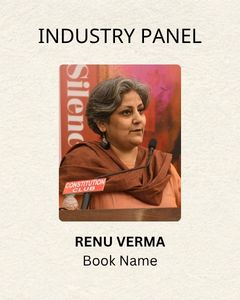
Sunday, 15 November 2026
02.45 – 04.15 PM
Kenneth Chenault
Book Talk: Equal to the Task: A Life Forged Between America’s Promise and Its Truth
Author Bio
Photos
Videos
Frequently Asked Questions (FAQs)
US Visa: For international invitees, a valid U.S. visa is required. Please note that IAAC is unable to assist with visa processing; however, where appropriate, we can provide official supporting documentation for selected participants.
Who Should Submit a Book for Consideration?
Submissions are ideally made through publishers or literary agents. However, if this is not possible, authors may submit their work directly for consideration.
Will you accept self-published books?
Self-published books will not be considered.
What are dates of publication being considered?
Books published in 2025, 2026 and scheduled for release in early 2027 will be considered.
What is the deadline?
The application Deadline is May 15, 2026 11:59pm EST.
What if I do not send a digital copy of my book?
Your application will be deemed incomplete and will not be processed until we receive a digital copy of your book.
What if I do not have a digital copy of my book?
Please contact us via email at admin@iaac.us so that we can further assist you. Please make sure to put “Digital Copy of Book Unavailable” in your subject title. Please note that IAAC will NOT be able to return any hardcopies that are mailed to us.
I submitted my book last year, can I submit the same book this year?
If your book was not part of our literary festival last year and falls within the publishing dates for this year, we welcome your submission.
When will I know if I am selected?
Invitations will go out in August.
Do you send out rejection letters?
Thank you for your submission. We are grateful for your interest. Due to the high volume of entries we receive, we are only able to contact authors who have been selected to participate.
Will every author have an independent session?
Some sessions will be independent and others will be panel discussions, all sessions will have a moderator. Authors will be informed of the format of their session in advance.
Who chooses the moderators?
The moderators are chosen by the IAAC literary team.
We welcome suggestions from the selected authors and/or their publishers but may not always be able to accommodate them.
Do you pay the authors?
The authors will receive a modest honorarium.
Do you pay the moderators?
The moderators will receive a modest honorarium.
Will IAAC purchase books?
IAAC will not purchase books.
Will I be able to sell my books at the venue if I am selected?
In the past, IAAC has encountered challenges in securing a bookseller to manage on-site sales during the festival. We will continue to make every effort to partner with a local bookseller for this purpose, and those conversations are ongoing. However, if we are unable to confirm a bookseller, book sales will be permitted for one hour following each author’s session. IAAC will not participate in the sale of books. Each author or publisher will need to arrange for books to be delivered to the venue and removed promptly after their allotted sales period. IAAC will also be happy to share links to sites where the book is available for purchase.
If you have further questions, please reach out to us at admin@IAAC.us
Curators and Team

Preethi Urs
Festival Director
Preethi Urs is originally from Bengaluru and is now a proud New Yorker. She credits these two cities for birthing and nurturing her love for literature and the arts. She started her career in public relations where she helped international companies connect with their American counterparts. After completing an MS in education from Bank Street College of Education, she taught kindergarten and first grade. She and her husband live in Manhattan, where their two children were born and raised.
Keith Tauro
Keith Tauro is an investment professional with expertise across strategic advisory and capital markets. His recent focus centres on guiding innovation-driven companies in the material science sector, helping them navigate strategic pathways including M&A, growth financing, and market positioning. He is based in New York City.
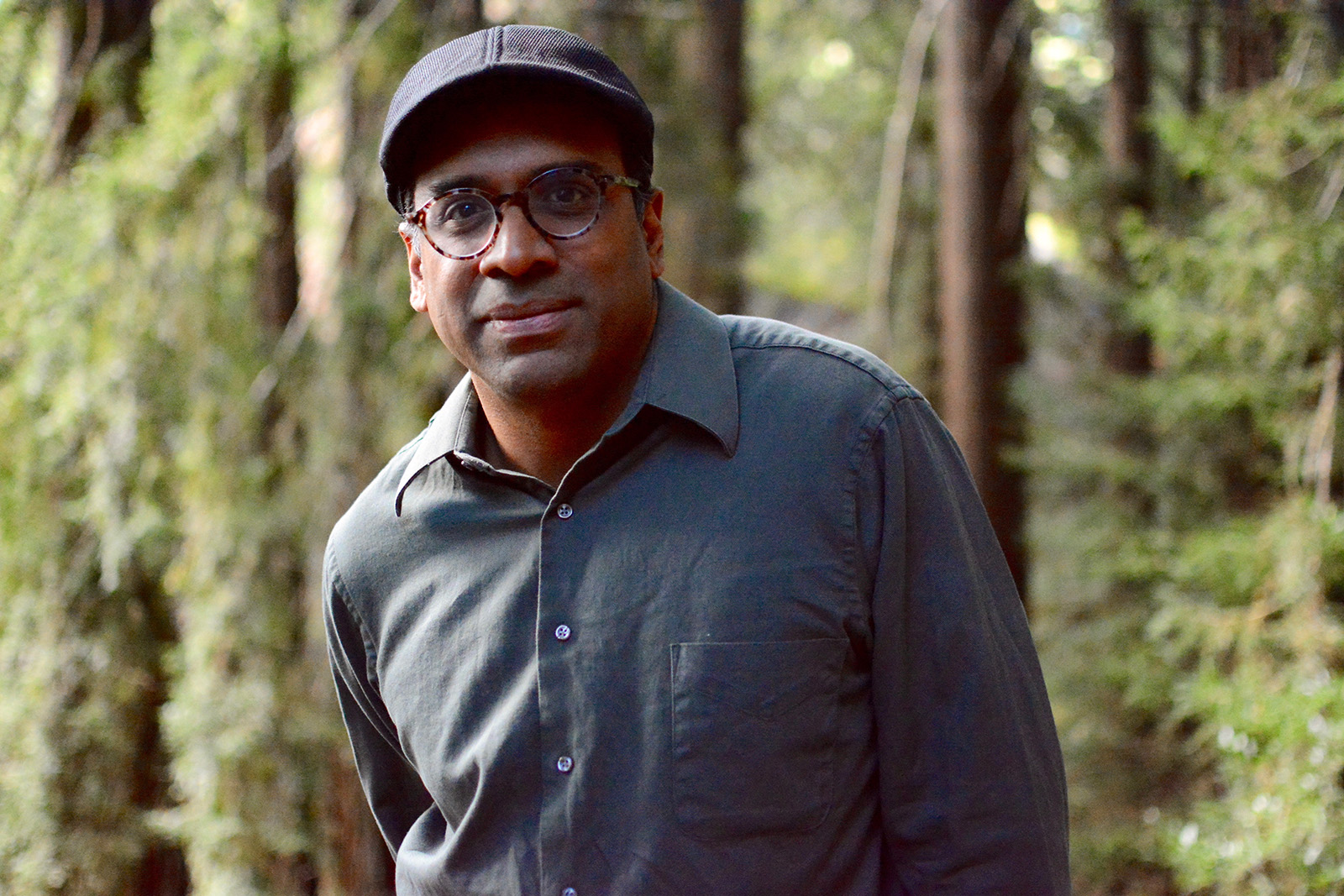
Dr. Ravi Shankar
Pushcart prize winning poet, translator and professor Ravi Shankar has published, edited or has forthcoming over fifteen books, including the Muse India award-winning translations of 9th century Tamil poet/saint, Andal, 'The Autobiography of a Goddess' (Zubaan/University of Chicago), 'The Golden Shovel: New Poems Honoring Gwendolyn Brooks" (University of Arkansas) and 'The Many Uses of Mint: New and Selected Poems 1997-2017' (Recent Works Press). Along with Tina Chang and Nathalie Handal, he co-edited W.W. Norton's "Language for a New Century: Contemporary Poetry from the Middle East, Asia & Beyond" and he founded one of the world's oldest electronic journals of the arts, Drunken Boat. He has taught and performed around the world and currently holds a research fellowship from the University of Sydney. His collaborative chapbook, 'A Field Guide to Southern China' written with T.S. Eliot Prize winner George Szirtes was just published in the UK August 2019 by Eyewear Publishing.

Professor Narayan Hegde
Professor Narayan Hegde is Emeritus Professor of English at SUNY College at Old Westbury, where he taught English, Indian, and World Literatures. As a Senior Fellow of the American Institute of Indian Studies, he has translated several works of Kannada literature, including Stallion of the Sun and Other Stories by U. R. Ananthamurthy, Annayya's Anthropology by A. K. Ramanujan, and a 19th-century drama, The Marriage Farce of Iggappa Hegade. He is a recipient of the Katha Translation Award. Translation of Avasthe, a Kannada novel by the eminent Indian author, U.R.Ananthamurthy, was recently published by HarperCollins India. He is currently part of a team translating the 15th century Kannada epic Kumaravyasa Bharatha for publication by Harvard University Press in its Murty Classical Library of India series.
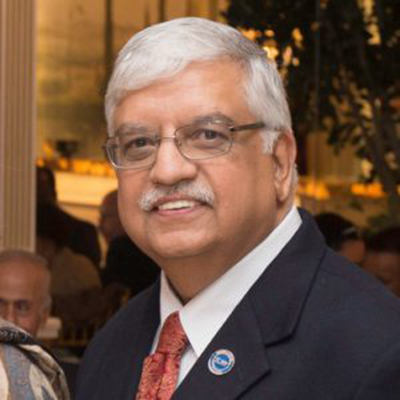
Professor S.N. Sridhar
Professor S.N. Sridhar is SUNY Distinguished Service Professor, Professor of Linguistics and India Studies, and Director of the Mattoo Center for India Studies at Stony Brook University, where he has been teaching since 1980.He graduated from Central College, Bangalore University, with a B.A. (Honors) and M.A. in English literature and linguistics with a first class and the first rank for the University. He did a Ph.D. in Linguistics with distinction from the University of Illinois at Urbana-Champaign.Professor S.N. Sridhar is an internationally recognized expert on multilingualism, Indian linguistics, World Englishes, and Kannada. His research concerns many areas, including: bilingualism (language contact and convergence); sociolinguistics of code-switching and code-mixing, language modernization, language spread; second language acquisition in non-native settings; Indian English and other World Englishes; reference grammar of Kannada (syntax, morphology, social dimensions); psycholinguistics (sentence production, code-mixing), applied linguistics (scope and relation to linguistic theory), historical linguistics (acquisition of subjecthood, contact-induced language change), and history of linguistics (Indian grammatical tradition). Currently, he is working on a monograph on multilingualism in India and another on the classic Kannada poet Kumara Vyasa and another on multilingualism in India. He heads an international consortium of scholars translating the Kannada classic Mahabharata by Kumaravyasa into English, to be published in three volumes in the Murthy Classical Library by Harvard University.
Professor S.N. Sridhar is author of three books: Kannada: Descriptive Grammar (Routledge, 1990 and Manohar 2001), Cognition and Sentence Production: A Cross-Linguistic Study (Springer Verlag, 1986), and India Kannada (Contemporary Kannada, Kannada University, 1995 and Abhinava, 2009); co-editor of two reference volumes ( Ananya: A Portrait of India (AIA, 1997), and Language in South Asia (Cambridge, 2008) and seven special issues of journals, and author of numerous peer-reviewed articles, book chapters, and encyclopedia entries.
Professor S.N. Sridhar’s research has been supported by the National Science Foundation, the U.S. Department of Education, and the American Institute of Indian Studies. He was designated Senior/Superior Scholar in the Humanities by the National Endowment for the Humanities. He has been a plenary or keynote speaker at many international conferences, including the Linguistic Society of India in 2013, and member of editorial board of journals, evaluator of publication projects and academic programs. He was conferred the select faculty rank of Distinguished Service Professor by the State University of New York in 2011. He is Vice-President and President Elect of the International Association of World Englishes.
Professor S.N. Sridhar is a co-founder of South Asian Languages Analysis (SALA) and organized its international conferences at Stony Brook in 1983 and 2004. He has also organized or co-organized conferences on Dravidian Linguistics, India Studies, the Teaching of Linguistics, and Teaching of Asian Languages.
Professor S.N. Sridhar is the founding Director of the Center for India Studies at Stony Brook, which has evolved over two decades into a national model of Indian American community-public university partnership in developing India Studies. He also served as the Founding Chair of the Department of Asian and Asian American Studies from 2002-2008.Professor S.N. Sridhar is also active in the community. He founded the India Society of Stony Brook in 1989 and served as its first President until 1994. He has also served as a member of the Board of Trustees of the Association of Indians in America and of the American Institute of Indian Studies and the Board of Governors of the Indo-American Arts Council, New York.He lives in Stony Brook with his wife and collaborator, Professor Kamal (Meena) Sridhar.
Prof. Makarand Paranjape
Makarand R Paranjape is currently Director of Education, Access Health Care Physicians, Spring Hill, Florida. Professor of English at Jawaharlal Nehru University for nearly 25 years, he also served as Director, Indian Institute of Advanced Study (Shimla) and held several fellowships/visiting professorships including the inaugural India Chair at the South Asian Studies Programme, National University of Singapore, the Shivadasani Fellowship, Oxford Centre for Hindu Studies, the CAPES Visiting Professorship at the University of São Paulo and Federal University of Minas Gerais, and the inaugural Erich Auerbach Visiting Chair in World Literature at the University of Tuebingen. The author/editor of over 50 books, he has published over 200 academic papers/book chapters, and over a thousand newspaper/periodical essays and op-eds. His ongoing columns include “Soft Power” (Open magazine), “Right Turn” (Gulf News), “Truth or Dare” (ToI Plus), and “US Sutra” (FirstPost). His latest books include Mahatma Gandhi: Mrityu aur Punarutthan (Penguin Swadesh), Identity’s Last Secret (BluOne Ink), and Swami Vivekananda: Hinduism and India’s Road to Modernity (HarperCollins).
Media Center
Press Release
FOR IMMEDIATE RELEASE:
Press Contact:
Indo-American Arts Council
info@iaac.us | iaac.us
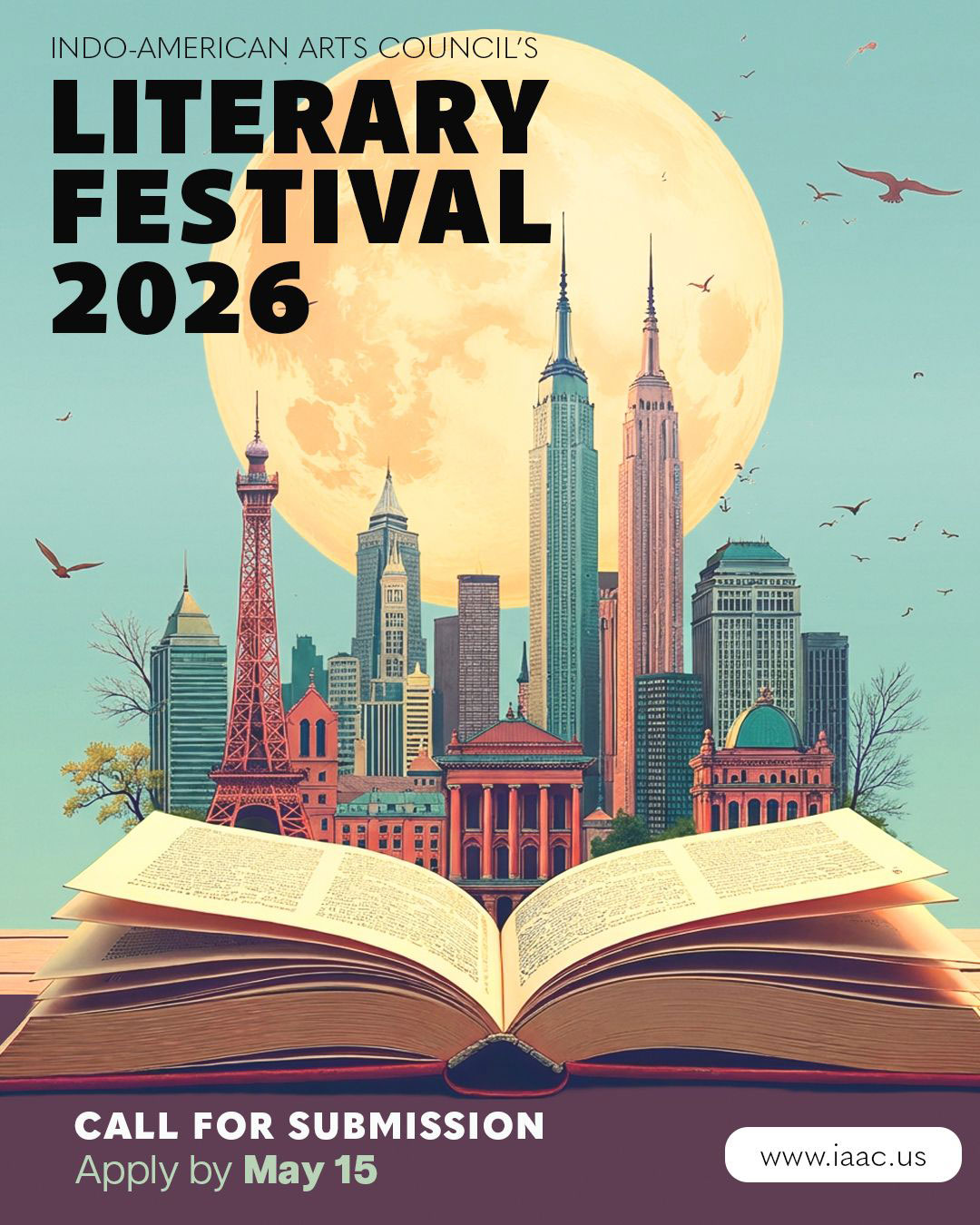
Experience the power of storytelling at the 2026 IAAC Literary Festival, coming to New York City in November. This distinguished celebration of the written word spotlights the vibrant cultures of India and its diaspora, offering a platform for stories that inspire, challenge, and connect.
We invite submissions of published books across a wide range of genres, including poetry. For the 2026 edition, the festival program will focus on adult and general literature. While children’s literature will not be featured this year, IAAC deeply values this vital genre and is actively exploring a dedicated, standalone initiative to support and showcase authors writing for young readers. We welcome submissions from Indian and diaspora authors, as well as from individuals of all backgrounds whose works draw inspiration from or are deeply rooted in India’s rich cultural heritage. Original content in English and Indian languages (with English translations) is encouraged.
Our festival has hosted luminaries such as Nobel Laureates Dr. Amartya Sen and Dr. Kailash Satyarthi, Minister of External Affairs of India Dr. S. Jaishankar, India’s foremost spiritual leader Sadhguru, International Booker Prize winning translator Daisy Rockwell, Booker Prize Nominee Avni Doshi, Padma Shri Subash Kak, Padma Shri Sunita Kohli, New York Times bestselling novelist Alka Joshi, bestselling mythologist Devdutt Pattanaik, Royal Society of Literature Fellow Meena Kandasamy, award winning chef-author Asma Khan, and Andrew Carnegie Medal winner Megha Majumdar alongside powerful voices in literature and thought. It is a space where literary excellence meets cultural depth, and ideas transcend borders.
IAAC champions themes such as Empowerment, Sustainability, and Inclusivity, forging partnerships with leading organizations like the Asian American Writers’ Workshop, Poets & Writers, and Kundiman. This is more than a festival – it’s a movement to elevate stories that matter.
We welcome your submissions and look forward to celebrating the transformative power of words. Join us in creating a legacy of literature that bridges worlds and celebrates humanity.
Here is information on some of our past festivals:
- https://iaac.us/iaac-literary-festival-2025/
- https://iaac.us/iaac-literary-festival-2024/
- https://iaac.us/iaac-literary-festival-2023/
- https://iaac.us/iaac-literary-festival-2022/
- https://iaac.us/iaac-literary-festival-2021/
- https://iaac.us/iaac-literary-festival-2020/
- https://iaac.us/iaac-literary-festival/
IAAC believes in supporting the artistic community. We have expanded our support for artists generally and authors specifically.
IAAC will:
- Pay an author honorarium.
- Pay a moderator honorarium.
- Include a link to the book’s purchase page. Please refer to the FAQs for more details on book sales.
Important: For international invitees, a valid U.S. visa is required. Please note that IAAC is unable to assist with visa processing; however, where appropriate, we can provide official supporting documentation for selected participants.
About the Indo-American Arts Council:
The Indo-American Arts Council is a not-for-profit arts organization passionately dedicated to promoting, showcasing, and building an awareness of the arts and artists whose heritage lies in the Indian subcontinent in the performing arts, visual arts, literary arts, and folk arts. IAAC supports all the artistic disciplines in classical, fusion, folk, and innovative forms influenced by the arts of India. They work cooperatively with colleagues around the United States to broaden collective audiences and create a network for shared information, resources, and funding. IAAC’s focus is to help artists and art organizations in North America as well as to facilitate artists from India to exhibit, perform, and produce their work in the United States. www.iaac.us