
Indo-American Arts Council
Literary Festival 2026
International House
500 Riverside Drive New York, NY 10027-3916 212-316-8400
November 2026
(All sessions are FREE and OPEN to the public. Please RSVP.)
For Parking Directions at venue, click here.
November 14-15, 11AM-6PM | International House, New York City
All sessions are FREE to attend
For Parking Directions at venue, click here.
SATURDAY PROGRAM
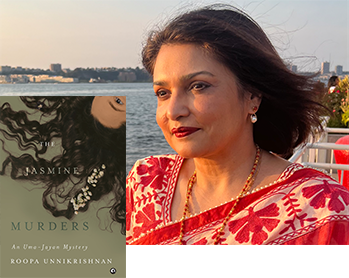
The Jasmine Murders: An Uma-Jayan Mystery
by Roopa Unnikrishnan
&
No. 10 Doyers Street
by Radha Vatsal
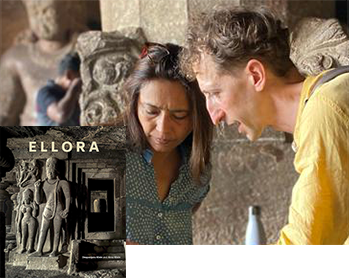
Ellora: Cross-Fertilization of Style in Buddhist, Hindu and Jain Cave Temples
by Deepanjana Klein and Arno Klein
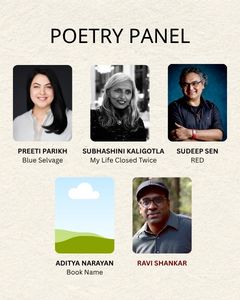
Poetry – Blue Selvage by Preeti Parikh, My Life Closed Twice by Subhashini Kaligotla, RED by Sudeep Sen, Forked Tongue by Aditya Narayan
Poetry – Blue Selvage by Preeti Parikh, My Life Closed Twice by Subhashini Kaligotla, RED by Sudeep Sen, Forked Tongue by Aditya Narayan
SUNDAY PROGRAM
SATURDAY PROGRAM
November 14-15, 11AM-6PM | International House, New York City
All sessions are FREE to attend
For Parking Directions at venue, click here.
Saturday, 14 November 2026
10.00 – 10.50 AM
Roopa Unnikrishnan
Book Talk: The Jasmine Murders: An Uma-Jayan Mystery
Roopa Unnikrishnan has always loved a good shot and a good plot twist. A Rhodes Scholar, Arjuna Awardee, and Commonwealth Games gold medallist in rifle shooting, she spent years helping global companies navigate high-stakes strategy and innovation before turning her sights to the world of mystery fiction. Now, instead of boardroom battles and market manoeuvres, she crafts devious whodunits where motive, opportunity, and human frailty collide.
Her nonfiction debut, The Career Catapult, won the Independent Press Award, and provided deeply researched strategy and career advice. But Roopa’s heart has always belonged to storytelling, and she interspersed the research with true coaching tales of transformation. Her mystery, The Jasmine Murders, grew out of the same instinct that once led an Oxford tutor to complain that her thesis was “too entertaining.” Roopa took that as a compliment and never looked back. She delights in building intricate puzzles, layering in red herrings, and exploring the secrets that hide beneath seemingly ordinary lives.
Drawing on her background as a strategist, she brings an insider’s understanding of power, ambition, and high-pressure environments to her fiction. The result: mysteries that are as psychologically sharp as they are page-turning. Her essays on strategy and creativity have appeared in Knowledge@Wharton and The Economic Times, reflecting her belief that the best stories—on the page or in business—are ultimately about people, choices, and consequences.
Roopa lives in New York City with her professor husband, their beagle, Tara, and an ever-growing stash of notebooks filled with clues, half-heard conversations, and suspicious characters. Their twins, Durga and Krishna, have launched into the world, but still occasionally get late-night messages that begin, “Would this murder method actually work…?”
Book
Set in 1960s South India, The Jasmine Murders follows a young bride and her police chief husband whose arrival in a remote town is marked by a man delivering a woman’s severed head to their doorstep. As a historic cyclone bears down on Manamadurai, the duo must navigate a covert network of local gossip to help her husband untangle a web of communal tension and buried secrets before the violence consumes them both.
Book Reviews
“The novel grabbed me and didn’t let go. Unnikrishnan has a deft hand. The characters are compelling. I eagerly await the next offering.” — Peter Herford, international journalist.
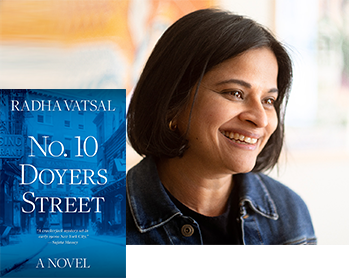
Radha Vatsal
Book Talk: No. 10 Doyers Street
Radha Vatsal is the author of the acclaimed Kitty Weeks mystery novels set in World War I-era New York. Her writing has appeared in The New York Times, The Atlantic, and the Los Angeles Review of Books. Born and raised in Mumbai, India, she earned her Ph.D. in Film History from Duke University and has worked as a film curator, political speechwriter, and freelance journalist. She lives in New York City. Visit her website at www.radhavatsal.com.
Book
NEW YORK CITY, NY (September 25, 2024) — Radha Vatsal’s historical crime novel, No. 10 Doyers Street, is set against the backdrop of New York City’s Chinatown in the early 1900s. When Archana Morley, a woman journalist from India, becomes embroiled in a case involving the infamous gangster Mock Duck and his young daughter, she soon realizes that the case could be tied to the mayor’s plan to raze Chinatown.
Vatsal offers an original pan-Asian exploration of New York City history, bringing to life the challenges immigrants faced as the city made way for the modern era. Archana embarks on a quest for the truth that leads her from gritty alleys to the back-room politics of City Hall and beyond. She boldly reports Mock Duck’s story, understanding that her colleagues simply see an immigrant criminal, and not a father fighting for his daughter and home.
Inspired by real events, No. 10 Doyers Street is a gripping crime novel about New York City on the cusp of modernity, as seen through a unique immigrant perspective.
Book Reviews
“This page-turning caper explores the political, cultural, and economic forces that shaped Progressive Era New York.” — Kirkus Reviews
“[A] descriptive, engaging thriller set in the dark alleys of New York’s Chinatown more than a hundred years ago.” — Asian Review of Books
“Radha Vatsal has impressed me with her precise and astute observations and rich detail for some time, and her upcoming book shows Vatsal at the top of her game.” — CrimeReads
“[A]n engrossing read about the erasure of people and their homes and culture in the name of so-called progress.” — Historical Novel Society
In conversation with
Name
Moderator Bio.
Saturday, 14 November 2026
11.00 – 11.50 AM
Deepanjana Klein and Arno Klein
Book Talk: Ellora: Cross-fertilization of Style in Buddhist, Hindu and Jain Cave Temples
Deepanjana Klein, PhD, is the Special Advisor to the Chairperson, and the Director of Acquisitions and Development, at the Kiran Nadar Museum of Art (KNMA), New Delhi. She has been documenting the Ellora cave temples since 1993. After conducting doctoral research on Ellora, she was awarded a Mellon Foundation grant to create the first comprehensive photo documentation of the site with her husband, Arno Klein, and in conjunction with Dr. Walter Spink, then Professor Emeritus of the University of Michigan. Before KNMA, Dr. Klein served as the International Head of Modern, Contemporary, and Classical Indian and Southeast Asian Art at Christie's for fifteen years, and has also taught art history and theory. Arno Klein, PhD, is a research scientist and the Director of Innovative Technologies at the Child Mind Institute in Manhattan. Dr. Klein has held positions at Columbia University, Stony Brook University, and The New School. He first visited Ellora in 1992 with Professor Walter Spink and has since taken over 10,000 photographs of the site and created the elloracaves.org website.
Book
Ellora: Cross-Fertilization of Style in Buddhist, Hindu and Jain Cave Temples, is a new book about Ellora, a UNESCO World Heritage Site excavated between 600 CE and 1000 CE and the only cave temple site that houses Buddhist, Hindu, and Jain temples. The contributing authors investigate the caves by religion and myth, patronage and support, stylistic influence and exchange, chronology, and the process of carving and completion of these rock-cut temples. The book includes extensive photographic documentation, ground plans, and rarely seen 19th-century archival materials. [Co-edited by Deepanjana Klein and Arno Klein, with contributing authors Nicolas Morrissey, Lisa N. Owen, Vidya Dehejia, and Pia Brancaccio; with a foreword by Naman Ahuja. Contains 203 photographs by Arno Klein, 29 illustrations, and 22 drawings.]
In conversation with
Hugo
Moderator Bio
Saturday, 14 November 2026
11.00 – 11.50 AM
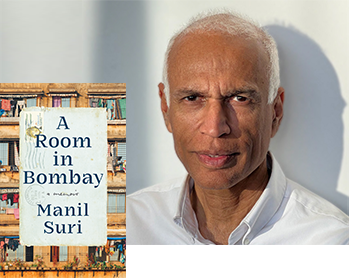
Manil Suri
Book Talk: A Room in Bombay: A Memoir
Manil Suri is the author of three internationally acclaimed novels including The Death of Vishnu, and a book on popular mathematics, The Big Bang of Numbers. His work has been translated into 27 languages and received several honors, including winning the Barnes and Noble Discover Prize, and being longlisted for the Booker Prize.
Book
Manil Suri is the author of the memoir, A Room in Bombay, three internationally acclaimed novels, The Death of Vishnu, The Age of Shiva and The City of Devi, and a book on popular mathematics, The Big Bang of Numbers. His work has been longlisted for the Booker Prize, shortlisted for the PEN/Faulkner, Lambda Literary, and PEN/E.O. Wilson Literary Science Writing Awards, and won the McKittrick Prize and the Barnes & Noble Discover Award, among others. He has served as a contributing opinion writer for the New York Times and is an emeritus professor of mathematics at the University of Maryland, Baltimore County.
Book Reviews
"Drawing on the 2,711 letters that his mother cherished, Suri has created a probing memoir about his family, especially the deep bond between him and his mother; his homosexuality; and the uncanny hold the apartment exerted on them all. . . . an empathetic portrait of his parents’ entrapment, and a candid account of his struggle to be responsible to them, and to himself." ― Kirkus
"In the Hindu epic, The Ramayan, Shravan exemplifies a devoted son, caring for his aging blind parents. That renowned novelist Suri mentions Shravan’s story in his moving memoir reflects the guilt he struggles with as he immigrated to the U.S. . . . Suri emerges as a Shravan for our times, demonstrating extraordinary patience and service to his parents under severely trying circumstances." ― Booklist
"Suri expertly parallels the apartment's combination of claustrophobia and coziness with his conflicted feelings about his aging parents . . . His portrait of [his mother] is clear-eyed and prismatic, highlighting both her sweetness and her intensity. Readers will find this a moving consideration of the ties that bind." ― Publishers Weekly
"In an effort to make the distance between himself and his parents more bearable, Suri writes letters -- more than 2,700 of them, all addressed to Prem. They show the richness, honesty and humor of his life. You will remember A ROOM IN BOMBAY long after you put it down as you consider your own understanding of home." ― Bookreporter
"Drawing from thousands of letters sent over three decades, Suri’s memoir revisits the single room in a crumbling, crowded apartment in Bombay (now Mumbai) that his family shared. Part prison, part haven, the room is imbued with deeper meaning as Suri wrestles with his enduring love for his mother." ― New York Times
"Rooms in Bombay are not big in size, but huge in heart. Manil Suri’s memoir will make you want to hug your mother. Written in clean, direct prose and without sentimentality, it explores all the dimensions of the complicated bond between parent and child―while also being laugh out loud funny. If you were born of a mother, read this book." ― Suketu Mehta, author of Maximum City: Bombay Lost and Found
In conversation with
Hugo
Moderator Bio
Saturday, 14 November 2026
12:00 – 12:50 PM
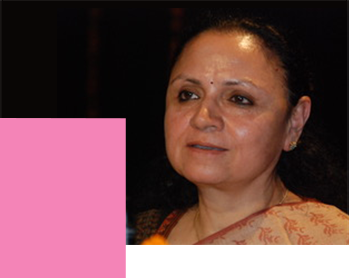
Advaitavadini Kaul
Book Talk: Kapila Jnanagarbha: Knowledge Unfolding Wisdom
I have dedicated my career to the study of Indian aesthetics, philosophical traditions, and the cultural heritage of Kashmir. After serving in senior academic positions at the Indira Gandhi National Centre for the Arts (IGNCA), New Delhi, INDIA for about three decades, I have continued to publish extensively. The title of my first book published in 1987 is, “Buddhist Savants of Kashmir and their Contributions Abroad". My recent works include the edited volume, "Asian Aesthetic Theories and Art Forms" published by IGNCA & D K Printworld (jointly) in 2021 and my latest book, लल्लेश्वरी के वाख़ was published by the Sahitya Akademi, New Delhi in 2024. It includes the Hindi verse translation of a collection of Kashmiri Vakhs of the14th century Saiva Yogini of Kashmir -Lalded.
Most recently, I conceptualized, curated and edited the commemoration volume titled, “Kapila Jnanagarbha: Knowledge Unfolding Wisdom – Offerings in Memory of Dr. Kapila Vatsyayan". It was Published in February 2026 by one of the leading publishers of Indological book known as Dev Books. The first copy of this volume was presented to His Holiness the Dalai Lama on April 27th at his residence in Macleod Ganj. The Dalai Lama used to address Dr. Kapila Vatsyayan as ‘Mataji’. A formal release and panel discussion on this volume was held at the India International Centre (IIC), New Delhi on May 21st. The volume serves as a comprehensive document reflecting the vision and contributions of Dr. Kapila Vatsyayan, one of India’s leading visionary personalities whose contributions have been immense in the restoration and preservation of India’s holistic art and culture at various levels.
Book
Kapilā Jñānagarbhā is the bouquet of variegated hues presented in the form of a volume of offerings to
Dr. Kapila Vatsyayan by eminent personalities, expert scholars and artistes, also her family to keep the
fragrance of her vision and contributions fresh and vibrating to inspire future generations.
The title, Kapilā Jñānagarbhā: Knowledge Unfolding Wisdom, in itself celebrates the core qualities of the
personality whom we have seen in constant search for knowledge till her last breath. Through her
wisdom she made use of her acquired knowledge at various levels and in innumerable ways for reviving
and saving India’s holistic traditions of knowledge. In achieving her goals, it was her education in the
West, that provided her the critical tools and the ability to analyse things from multiple points of view
and the learning in India equipped her at the experiential level. Her contributions are immense.
Present volume is divided into two parts. Part I has two sections. The section A contains the Tributes by
eminent persons and section B has ten papers by eminent scholars highlighting Dr. Kapila Vatsyayan’s
vision and contributions. Part II contains academic papers by the scholars, experts in their respective
fields, who have remained closely associated with Dr. Vatsyayan and have got benefited or influenced by
her knowledge and wisdom by one way or the other. Part II is arranged in the Sections: C on Veda: The
Source of Knowledge; D on Sastra/Theory and Prayoga/Praxis; E on Kashmir Śaivism; F on Indian
Aesthetics; and G on Culture and Civilization.
In conversation with
Hugo
Moderator Bio
Saturday, 14 November 2026
02.00 – 02:50 PM
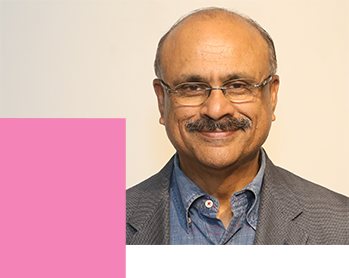
Rakesh Kaul
Book Talk: WaterFire Day Zero
Author Bio
In conversation with
Hugo
Moderator Bio
Saturday, 14 November 2026
03.00 – 03.50 AM
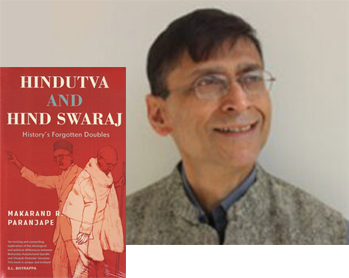
Makarand Paranjape
Book Talk: Hindutva and Hind Swaraj: History’s Unforgotten Ideas
Makarand R. Paranjape has been Professor of English at Jawaharlal Nehru University, New Delhi, for over twenty-three years. He also served as the Director, Indian Institute of Advanced Study, Shimla. The author/editor of over 50 books and hundreds of academic papers, he is also a poet, novelist, columnist, and public intellectual. His latest books include JNU: Nationalism and India’s Uncivil War (Rupa, 2022), Identity’s Last Secret (BluOne, 2022), and Swami Vivekananda: Hinduism and India’s Road to Modernity (HarperCollins, 2020). He has been in touch with the works of Sri Aurobindo and modern India’s spiritual masters for over forty years.
Book
Hindutva and Hind Swaraj: History’s Forgotton Doubles | The Battle of Ideas in Indian History and Politics | Hindu Identity, Nationalism, and Democracy
Makarand R Paranjape
A close reading of the persistent antagonisms in Indian history, Hindutva and Hind Swaraj focuses on the ideological clash between Mohandas Karamchand Gandhi and Vinayak Damodar Savarkar, representing the broader ideological, political, and cultural factions within Hindu and Indian society. The central argument is that this antagonism continues to influence national life, both politically and personally, reflecting two contrasting ideologies: Hindutva and Hind Swaraj.
Divided into three parts, the first part addresses the lack of historical records in ancient India and the importance of creating a national history to reclaim India’s past. In the part second part, the author examines the discovery of India’s cultural and historical identity, the impact of colonialism, and the need for a balanced discourse that acknowledges the complexity and diversity of Indian society. While the third looks at the e contemporary political landscape, the rise of Hindutva, and the ongoing struggle between Gandhi’s vision of non-violent resistance and Savarkar’s advocacy of armed rebellion. It highlights the unresolved tensions between these two ideologies and their implications for India’s future.
The book emphasizes the need for a new approach to understanding and reconciling these differences, suggesting that a balanced discourse and a deeper inquiry into the nature of nationalism, democracy, and Indian society are essential for creating a new India.
In conversation with
Hugo
Moderator Bio

Saturday, 14 November 2026
04.00 – 04:50 PM
POETRY
Preeti Parikh
Book Talk: Blue Selvage
Preeti Parikh is a poet and essayist with a past educational background in medicine and a recent MFA from The Rainier Writing Workshop. A Kundiman Fellow and National Poetry Series finalist, she is the recipient of a 2023 Sustainable Arts Foundation grant award and a 2024 Ohio Arts Council Individual Excellence award. Preeti's poems appear in Beloit Poetry Journal, The Cincinnati Review, Hayden's Ferry Review, The Margins, Zocalo Public Square, and other literary journals. Her writing is anthologized in Nonwhite and Woman: 131 Micro Essays on Being in the World, the Yearbook of Indian Poetry in English (2021 and 2022 editions), and The Last Milkweed. Preeti has been a Millay Arts Artist-in-Residence and an AWP Writer to Writer Program mentee and has received staff scholarships from the Bread Loaf Writers' Conference. Her work has been performed in a poetry-ballet collaboration and exhibited at the 2025 Creative Asian Society Art Exhibition. Born and raised in India, she now lives with her family in Ohio. Preeti Parikh's collection of poems, BLUE SELVAGE, named by Debutiful as one of The Debut Poetry Collections You Need to Read in 2026, will be out in November from Tupelo Press.
BOOK
Blue Selvage is a formally daring, deeply embodied meditation that weaves lyric, essay, documentary fragments, and historical reckoning into an exploration of skin, cloth, color, and form as living archives. Here, passion for indigo, a medical-science-informed perspective, fascination with the materiality of cloth and skin, and a journeying towards reclamation interlace with feminist inquiries and cultural examination to conceptualize the poems' multivalent inhabitances. Expansive in its rhetorical modes and landscapes, Blue Selvage is unified by a remarkable singularity of voice and vision through which Parikh skillfully invokes form as metaphor, performance, dramatization, and content. What emerges is a capacious field of attention, where intimacy and history press against one another, and where writing itself becomes an act of unstitching and re-making—an ethical, sensuous practice of staying with what the body remembers and what culture would prefer to erase.
BOOK REVIEWS
ADVANCE PRAISE FOR BLUE SELVAGE (TUPELO PRESS, NOV 2026)
Poetry as the work of embodiment, of transformation—this principle manifests as a gorgeous new expression in Blue Selvage. But as Preeti Parikh shows, the arc towards self-realization is also about the tensions between raveling and unraveling, stitching and unstitching, text and lacuna. Delving into the intimacy of memory and the violence of history, Parikh understands that “opacity and translucence” are both necessary to deep testimony. Bold in its forms and defiant in its truths, Blue Selvage is a radiant debut. — Rick Barot, Author of Moving the Bones
The artistry of Preeti Parikh’s debut collection, Blue Selvage, is one of daring precision—an embroidery of vivid, textured language that explores the instability of boundaries and the implications of integument: cover and exposure, clothing and skin, diaspora and the “dreamcloth” of identity. This is the poetics we need today, one that deeply enacts the decentralization of power by meditating on edges both frayed and selvaged and traversing the thresholds of body, language, culture, and memory. Parikh’s multi-lingual, multi-modal tapestry is beautiful, articulate, and brave. A refreshing and liberating voice! — Jennifer Elise Foerster, Author of The Maybe Bird
Blue Selvage is an inventive palimpsest of South Asian history and autobiography, unspooling the female body and the weight of its inheritance. Braiding memory with etymology, and medical terminology with the cadences of Hindi and Gujarati, Parikh navigates multiple geographies—clinical, domestic, diasporic. Here, fabric both covers and bares. The body is archive and anatomy, born a ‘milky clump’ of cotton and marked by indigo's colonial violence. This is fierce work on the gaze and its exposures, a reckoning with touch, shame, and desire that stains the reader's mind blue and selvages the self. A stunning debut by a luminous new voice. — Shikha Malaviya, Author of Anandibai Joshee, A Life in Poems
Blue Selvage is a chronicle of dichotomies, both difficult and joyful. Preeti Parikh’s debut collection of poems is exhilarating. Here we find a convincingly modern mind — one formed in girlhood on one continent and evolving into an empowered woman and poet on another. The tensions of family and culture explored in this book are numerous: what’s lost and what’s found; what’s private and what’s a violation; what’s a mask and what’s a face; what is broken and what is healed. The concentrated, formally varied poems weave shame and empowerment, the buried and the unearthed, the forgotten and the remembered. When Parikh writes, “let the fabric breathe,” she is conveying complexities of feeling, fluency, and morality that any reader will recognize as clarity and grace. — David Biespiel, Author of Beautiful Is the World
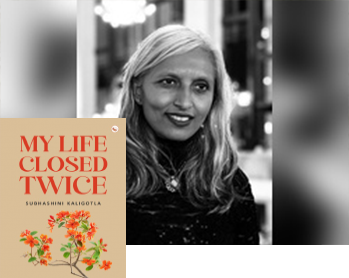
Subhashini Kaligotla
Book Talk: My Life Closed Twice
Subhashini Kaligotla is a poet and an art historian of premodern South Asia. Her first poetry collection, Bird of the Indian Subcontinent (2018), was a finalist for the Kundiman Poetry Prize and won the Great Indian Poetry Collective's Emerging Poets Prize, selected by Arundhathi Subramaniam. Her second poetry volume, My Life Closed Twice (2025), has been longlisted by the Kalinga Literary Festival for their 2026 award for best poetry collection. Poems in the collection have appeared in such journals as The Paris Review, Guernica, and Open Magazine, and have been included in several anthologies of Indian and diasporic poetry, notably The Penguin Book of Indian Poets (2022). Kaligotla is author of the art history monograph, Shiva's Waterfront Temples: Architects and Their Audiences in Medieval India (Yale, 2022) and is Barbara Stoler Miller Associate Professor in the Department of Art History and Archaeology at Columbia University.
BOOK
Grief does not travel in straight lines; it spirals, echoes and persists. My Life Closed Twice embodies this truth profoundly. Subhashini Kaligotla's second collection immerses you in loss, weaving together fragments and litanies, lists and unanswered questions, revisiting the same wound from varied perspectives. Rooted in the art, literature and history of premodern India, these poems articulate an ancient language of private devastation.
BOOK REVIEWS
Subhashini Kaligotla's ingeniously fashioned poetic structures—which are light, flexible, delicate yet possessed of remarkable tensile strength and architectural clarity and integrity—aren't just beautiful in themselves. They're also vessels for deep imaginative feeling and thinking and wondering and longing. She has a unique, compelling lyric voice and a distinguished twenty-first century consciousness. — Vijay Seshadri
Anger, denial, bargaining, despair, all the stages of grief except acceptance, each stage overlaid with the forensic precision generated by love when it has nowhere to go. These enraged, laceratingly plainspoken poems burn with the singular self-awareness that is the writer's curse, and the writer's gift. Two deaths enclose the book like ‘two dates // enclosed / by parentheses’. It is impossible to read, say, ‘Only Your Brother Will You Lose’—its fifty shards hammered into the flesh like fifty nine-inch nails—and come away unscathed. — Jeet Thayil
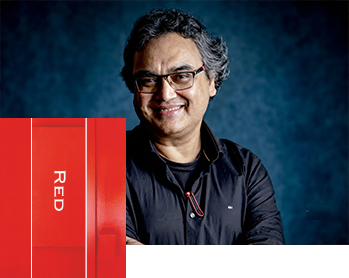
Sudeep Sen
Book Talk: RED
Professor of Practice, Dept of English & Cultural Studies, Panjab University, Chandigarh, India; Visiting Associate, Centre for Indian Studies in Africa (CISA), University of Witwatersrand, Johannesburg, South Africa, and Co-Chair, Asia-Pacific Writers & Translators (APWT), Australia. Formerly, he was Visiting Scholar at Harvard University, USA.
He is a leading international poet whose prize-winning books include: Postmarked India: New & Selected Poems (HarperCollins), Aria (A K Ramanujan Translation Award), Fractals: New & Selected Poems | Translations 1980-2015 (London Magazine Editions), EroText (Penguin), Kaifi Azmi: Poems | Nazms (Bloomsbury), Bhutan (Drunken Boat, USA), Anthropocene (Pippa Rann, Rabindranath Tagore Literary Prize), Red (Pippa Rann), and Rock completes ‘The Eco Trilogy’. Edited landmark anthologies include: The HarperCollins Book of English Poetry, Modern English Poetry by Younger Indians (Sahitya Akademi), Converse: Contemporary English Poetry by Indians (Pippa Rann, UK), and Himalayas (Shearsman Books, UK). Blue Nude: Ekphrasis & New Poems (Jorge Zalamea International Poetry Prize), Rock, and The Whispering Anklets are forthcoming.
His photography, represented by ArtMbassy, Rome/Berlin, is part of private/public collections. The Government of India awarded him the senior fellowship for “outstanding persons in the field of culture/literature.” Sen is the first Asian honoured to deliver the Derek Walcott Lecture and read at the Nobel Laureate Festival.
BOOK
Sudeep Sen's prize-winning books include: Postmarked India: New & Selected Poems (HarperCollins), Aria (A K Ramanujan Translation Award), Fractals: New & Selected Poems | Translations 1980-2015 (London Magazine Editions), EroText (Penguin), Kaifi Azmi: Poems | Nazms (Bloomsbury), Anthropocene (Rabindranath Tagore Literary Prize), Red and Rock. Edited landmark anthologies The HarperCollins Book of English Poetry, Modern English Poetry by Younger Indians (Sahitya Akademi), Converse: Contemporary English Poetry by Indians (UK), and Himalayas (UK). The Government of India awarded him the senior fellowship for “outstanding persons in the field of culture/literature.” Sen is the first Asian honoured to deliver the Derek Walcott Lecture and read at the Nobel Laureate Festival.
BOOK REVIEWS
Sudeep Sen is a shining star in India’s poetic firmament. — WILLIAM DALRYMPLE
Sudeep Sen’s poems are a present which bring — like all true poetry — so much companionship. — JOHN BERGER
Sudeep Sen gives me faith in writing, in reading and in a life of thoughtful and poetic enquiry. He holds high the banner of literature and pushes it forwards with a passion and intelligence we would all do well to emulate. Such dedication to art is as rare as it is urgent. — PICO IYER
Aditya Narayan
Book Talk: Forked Tongue
Author Bio

In conversation with
Ravi Shankar
Pushcart prize winning poet, translator and professor Ravi Shankar has published, edited or has forthcoming over fifteen books, including the Muse India award-winning translations of 9th century Tamil poet/saint, Andal, 'The Autobiography of a Goddess' (Zubaan/University of Chicago), 'The Golden Shovel: New Poems Honoring Gwendolyn Brooks" (University of Arkansas) and 'The Many Uses of Mint: New and Selected Poems 1997-2017' (Recent Works Press). Along with Tina Chang and Nathalie Handal, he co-edited W.W. Norton's "Language for a New Century: Contemporary Poetry from the Middle East, Asia & Beyond" and he founded one of the world's oldest electronic journals of the arts, Drunken Boat. He has taught and performed around the world and currently holds a research fellowship from the University of Sydney. His collaborative chapbook, 'A Field Guide to Southern China' written with T.S. Eliot Prize winner George Szirtes was just published in the UK August 2019 by Eyewear Publishing.
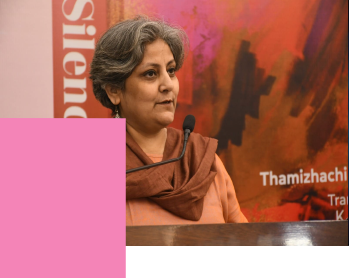
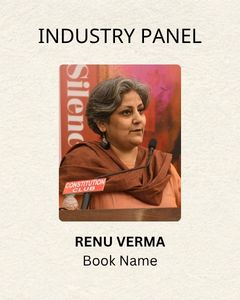
INDUSTRY PANEL:
Saturday, 14 November 2026
02.00 – 02:50 PM
Renu Verma
Industry Panel – Book Name
Renu Kaul Verma is the Managing Director and Publisher of the Vitasta Blackspine Publishing Group. A former journalist with The Indian Express and Hindustan Times, she founded Vitasta Publishing in July 2004 with the conviction that books have the power to shape conversations, preserve memory, and challenge accepted narratives.
Over the past twenty-two years, she has guided the growth of Vitasta from a single-title independent press into a publishing house with a catalogue of more than 700 books across history, politics, biography, gender, literature, philosophy, culture, translations, and children's publishing. Throughout that journey, she has remained committed to publishing works that combine intellectual depth with accessibility.
Working closely with authors, academics, journalists, public intellectuals, and first-time writers, Renu has championed voices that broaden public conversation and bring fresh perspectives to readers. Her editorial vision continues to be guided by a belief in the enduring relevance of independent publishing and the responsibility of publishers to nurture ideas that inform, question, and inspire.
She is a regular participant in literary festivals and publishing forums, where she speaks on independent publishing, editorial stewardship, and the evolving role of books in a rapidly changing world.
About Vitasta Publishing
Vitasta Publishing is an independent publishing house that believes the most meaningful books are those that ask questions, invite reflection, and remain relevant long after they are first read. Guided by its motto, Books That Dare the System, its publishing programme is shaped not by a single genre or viewpoint, but by an enduring curiosity about people, history, ideas, cultures, and the changing world around us.
From its very first publication, Brahmacharya Gandhi and His Women Associates, Vitasta established a distinctive editorial voice by publishing books that question accepted narratives, recover overlooked histories, and encourage informed dialogue. Today, its catalogue of more than 700 titles spans history, politics, biography, literature, philosophy, religion, sociology, children's books, the arts, translations, and contemporary fiction, bringing together established scholars, journalists, public intellectuals, creative writers, and emerging voices.
As an independent publisher, Vitasta remains committed to editorial freedom and to publishing books that are thoughtful, well-researched, and accessible. Whether exploring the complexities of the past, examining the realities of the present, or imagining new possibilities through literature, its books invite readers to think deeply, question generously, and engage openly with the world.
In conversation with
Hugo
Moderator Bio
Saturday, 14 November 2026
04.00 – 04.50 PM
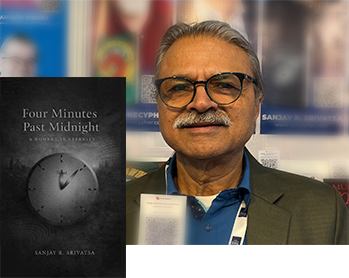
Sanjay Srivatsa
Book Talk: Four Minutes Past Midnight: A Moment in Eternity
Sanjay Srivatsa, born in India graduated with a BS in Chemical Engineering, ACTech Madras and MS ChE, IIT Chicago. He joined Nalco in 1979 as a Researcher and was promoted to Group Leader in 1984. Sanjay earned Researcher of the Year awards in 1981 and '82. In 1986, he was promoted to Market Development Manager for the Light Industry Market. In 1989, Sanjay was awarded Marketer of the Year. In 1991 Sanjay joined Sales and was promoted to District Manager in 1997 after successive years of sales accolades, achieving 'All Pro' status, District Salesman of the Year as well as Chairman's Club award. In 1998, Sanjay was promoted to General Manager and Country Manager of Nalco India. Sanjay returned to the US in 2002 retiring from Nalco in the subsequent year. In the next 8 years, Sanjay worked for Tyco (Earthtech), Ecovation and GWE developing his skills in Anaerobic Design and infrastructure management. In 2011 Sanjay returned to Nalco to develop Integrated Water Management services focusing on clients' sustainability goals. After retiring from Nalco (now an Ecolab company) in 2020, Sanjay joined Solecta as Vice President offering process membrane solutions 'Co-Creating' sustainable and disruptive applications. Today Sanjay runs a consultancy Kisan Organics LLC, to help industry improve carbon, water, energy
footprints, providing technical/Capex risk assessments. For his work in facilitating a remote IIT campus in Bangalore, India, Sanjay was awarded the International Alum of the Year in 2004. Sanjay served on the board of ISBT (Bevtech) since 2021-25. Sanjay enjoys composing music, producing and public speaking. He is the author of two books, the prior published in 2010: A 'Mischievous Chicken'.
BOOK
This Novel is the culmination of my father's undisclosed wartime story. From 1941 to 1947, my father, K.R. Srivatsa, born 1920 as a citizen of Colonial India, escaped concentration camps in occupied Singapore after it was bombed in '41 and secreted passage to Japan. As a Radio broadcaster in Tokyo for the Indian Independence League (IIL), he witnessed live, the bombings in Singapore and Japan. He later served with the US Eighth Army (SCAP Occupational Services) in Tokyo and Okinawa. He was wrongfully captured by the British accusing him of false propaganda and co-conspiracy and was repatriated to Calcutta to be sentenced to death. The book engages the reader spanning two centuries documenting his ancestral life. It is targeted towards enthusiasts of WWII, conspiracy buffs, and Indian Independence efforts with associated intrigues. Further, the book is a cultural reference delving into the various religious and traditional practices part of the rich fabric in Southeast Asia, China and Japan today. As a narrative of the protagonist, the story provides the reader an opportunity to appreciate how these cultures existed and evolved during that tumultuous period.
In conversation with
Hugo
Moderator Bio
Saturday, 14 November 2026
04.00 – 04.50 PM
Sandip Das, Alka Jena, Pallavi Das
Book Talk: The Orissan
Author Bio
In conversation with
Hugo
Moderator Bio
SUNDAY PROGRAM
Saturday, 14 November 2026
03.00 – 03.50 AM
Makarand Paranjape
Book Talk: Hindutva and Hind Swaraj: History’s Unforgotten Ideas
From Page to Premiere: Adapting Books to Screen
Have you ever imagined your novel on Netflix or the big screen? In this candid session, a seasoned TV and film executive and an agent share the insider path from bookshelf to screen adaptation. We’ll unpack the steps to get your book optioned, what producers look for, and how to protect your creative vision in Hollywood. Join us for an exclusive conversation designed for authors eager to bring their stories to life on screen. Learn what it really takes to adapt a book into a movie or TV series, from optioning rights and working with screenwriters to navigating Hollywood’s development process. Whether you’re published traditionally or independently, this session will give you the tools and industry insight to turn your narrative into a cinematic experience.
Priya Doraswamy is an Oscar nominated Executive Producer. She is the founder of the Lotus Lane Literary agency where she represents screenwriters and authors from around the world. She is constantly striving to bring lesser known voices to mainstream media and advocating for inclusivity in the book and film/tv industries.
In conversation with
Hugo
Moderator Bio
Photos
Videos
Frequently Asked Questions (FAQs)
US Visa: For international invitees, a valid U.S. visa is required. Please note that IAAC is unable to assist with visa processing; however, where appropriate, we can provide official supporting documentation for selected participants.
Who Should Submit a Book for Consideration?
Submissions are ideally made through publishers or literary agents. However, if this is not possible, authors may submit their work directly for consideration.
Will you accept self-published books?
Self-published books will not be considered.
What are dates of publication being considered?
Books published in 2025, 2026 and scheduled for release in early 2027 will be considered.
What is the deadline?
The application Deadline is May 15, 2026 11:59pm EST.
What if I do not send a digital copy of my book?
Your application will be deemed incomplete and will not be processed until we receive a digital copy of your book.
What if I do not have a digital copy of my book?
Please contact us via email at admin@iaac.us so that we can further assist you. Please make sure to put “Digital Copy of Book Unavailable” in your subject title. Please note that IAAC will NOT be able to return any hardcopies that are mailed to us.
I submitted my book last year, can I submit the same book this year?
If your book was not part of our literary festival last year and falls within the publishing dates for this year, we welcome your submission.
When will I know if I am selected?
Invitations will go out in August.
Do you send out rejection letters?
Thank you for your submission. We are grateful for your interest. Due to the high volume of entries we receive, we are only able to contact authors who have been selected to participate.
Will every author have an independent session?
Some sessions will be independent and others will be panel discussions, all sessions will have a moderator. Authors will be informed of the format of their session in advance.
Who chooses the moderators?
The moderators are chosen by the IAAC literary team.
We welcome suggestions from the selected authors and/or their publishers but may not always be able to accommodate them.
Do you pay the authors?
The authors will receive a modest honorarium.
Do you pay the moderators?
The moderators will receive a modest honorarium.
Will IAAC purchase books?
IAAC will not purchase books.
Will I be able to sell my books at the venue if I am selected?
In the past, IAAC has encountered challenges in securing a bookseller to manage on-site sales during the festival. We will continue to make every effort to partner with a local bookseller for this purpose, and those conversations are ongoing. However, if we are unable to confirm a bookseller, book sales will be permitted for one hour following each author’s session. IAAC will not participate in the sale of books. Each author or publisher will need to arrange for books to be delivered to the venue and removed promptly after their allotted sales period. IAAC will also be happy to share links to sites where the book is available for purchase.
If you have further questions, please reach out to us at admin@IAAC.us
Curators and Team
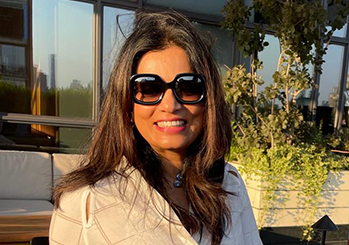
Preethi Urs
Festival Director
Preethi Urs is originally from Bengaluru and is now a proud New Yorker. She credits these two cities for birthing and nurturing her love for literature and the arts. She started her career in public relations where she helped international companies connect with their American counterparts. After completing an MS in education from Bank Street College of Education, she taught kindergarten and first grade. She and her husband live in Manhattan, where their two children were born and raised.
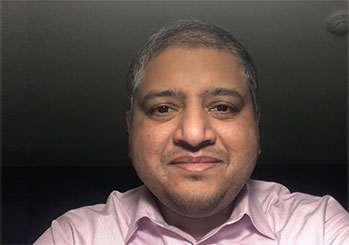
Keith Tauro
Keith Tauro is an investment banking professional with expertise across strategic advisory and capital markets, shaped by tenures at Nomura Greentech, Evercore, and Barclays. His recent focus centers on guiding innovation-driven companies in the material science sector, helping them navigate strategic pathways including M&A, growth financing, and market positioning. Prior to entering financial services, Keith worked at Emirates Airlines, bridging his early career between an engineering undergraduate degree and business school. He is based in New York City.
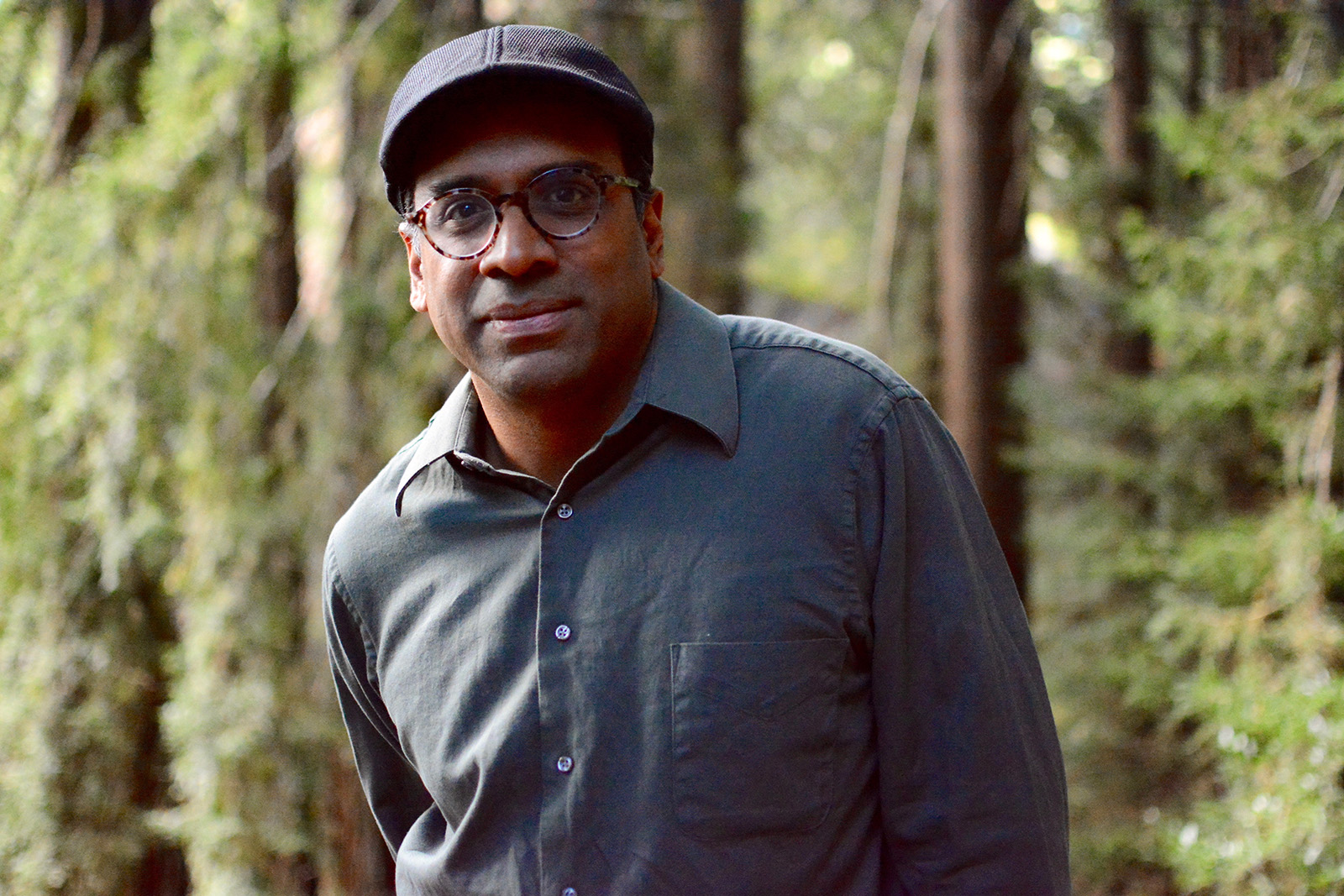
Dr. Ravi Shankar
Pushcart prize winning poet, translator and professor Ravi Shankar has published, edited or has forthcoming over fifteen books, including the Muse India award-winning translations of 9th century Tamil poet/saint, Andal, 'The Autobiography of a Goddess' (Zubaan/University of Chicago), 'The Golden Shovel: New Poems Honoring Gwendolyn Brooks" (University of Arkansas) and 'The Many Uses of Mint: New and Selected Poems 1997-2017' (Recent Works Press). Along with Tina Chang and Nathalie Handal, he co-edited W.W. Norton's "Language for a New Century: Contemporary Poetry from the Middle East, Asia & Beyond" and he founded one of the world's oldest electronic journals of the arts, Drunken Boat. He has taught and performed around the world and currently holds a research fellowship from the University of Sydney. His collaborative chapbook, 'A Field Guide to Southern China' written with T.S. Eliot Prize winner George Szirtes was just published in the UK August 2019 by Eyewear Publishing.

Professor Narayan Hegde
Professor Narayan Hegde is Emeritus Professor of English at SUNY College at Old Westbury, where he taught English, Indian, and World Literatures. As a Senior Fellow of the American Institute of Indian Studies, he has translated several works of Kannada literature, including Stallion of the Sun and Other Stories by U. R. Ananthamurthy, Annayya's Anthropology by A. K. Ramanujan, and a 19th-century drama, The Marriage Farce of Iggappa Hegade. He is a recipient of the Katha Translation Award. Translation of Avasthe, a Kannada novel by the eminent Indian author, U.R.Ananthamurthy, was recently published by HarperCollins India. He is currently part of a team translating the 15th century Kannada epic Kumaravyasa Bharatha for publication by Harvard University Press in its Murty Classical Library of India series.
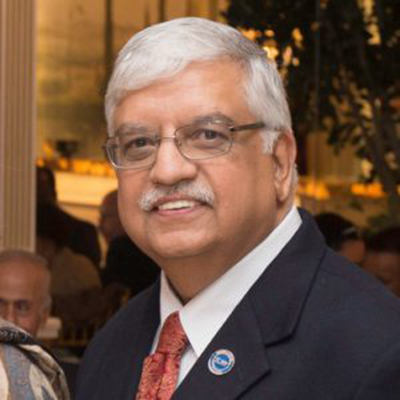
Professor S.N. Sridhar
Professor S.N. Sridhar is SUNY Distinguished Service Professor, Professor of Linguistics and India Studies, and Director of the Mattoo Center for India Studies at Stony Brook University, where he has been teaching since 1980.He graduated from Central College, Bangalore University, with a B.A. (Honors) and M.A. in English literature and linguistics with a first class and the first rank for the University. He did a Ph.D. in Linguistics with distinction from the University of Illinois at Urbana-Champaign.Professor S.N. Sridhar is an internationally recognized expert on multilingualism, Indian linguistics, World Englishes, and Kannada. His research concerns many areas, including: bilingualism (language contact and convergence); sociolinguistics of code-switching and code-mixing, language modernization, language spread; second language acquisition in non-native settings; Indian English and other World Englishes; reference grammar of Kannada (syntax, morphology, social dimensions); psycholinguistics (sentence production, code-mixing), applied linguistics (scope and relation to linguistic theory), historical linguistics (acquisition of subjecthood, contact-induced language change), and history of linguistics (Indian grammatical tradition). Currently, he is working on a monograph on multilingualism in India and another on the classic Kannada poet Kumara Vyasa and another on multilingualism in India. He heads an international consortium of scholars translating the Kannada classic Mahabharata by Kumaravyasa into English, to be published in three volumes in the Murthy Classical Library by Harvard University.
Professor S.N. Sridhar is author of three books: Kannada: Descriptive Grammar (Routledge, 1990 and Manohar 2001), Cognition and Sentence Production: A Cross-Linguistic Study (Springer Verlag, 1986), and India Kannada (Contemporary Kannada, Kannada University, 1995 and Abhinava, 2009); co-editor of two reference volumes ( Ananya: A Portrait of India (AIA, 1997), and Language in South Asia (Cambridge, 2008) and seven special issues of journals, and author of numerous peer-reviewed articles, book chapters, and encyclopedia entries.
Professor S.N. Sridhar’s research has been supported by the National Science Foundation, the U.S. Department of Education, and the American Institute of Indian Studies. He was designated Senior/Superior Scholar in the Humanities by the National Endowment for the Humanities. He has been a plenary or keynote speaker at many international conferences, including the Linguistic Society of India in 2013, and member of editorial board of journals, evaluator of publication projects and academic programs. He was conferred the select faculty rank of Distinguished Service Professor by the State University of New York in 2011. He is Vice-President and President Elect of the International Association of World Englishes.
Professor S.N. Sridhar is a co-founder of South Asian Languages Analysis (SALA) and organized its international conferences at Stony Brook in 1983 and 2004. He has also organized or co-organized conferences on Dravidian Linguistics, India Studies, the Teaching of Linguistics, and Teaching of Asian Languages.
Professor S.N. Sridhar is the founding Director of the Center for India Studies at Stony Brook, which has evolved over two decades into a national model of Indian American community-public university partnership in developing India Studies. He also served as the Founding Chair of the Department of Asian and Asian American Studies from 2002-2008.Professor S.N. Sridhar is also active in the community. He founded the India Society of Stony Brook in 1989 and served as its first President until 1994. He has also served as a member of the Board of Trustees of the Association of Indians in America and of the American Institute of Indian Studies and the Board of Governors of the Indo-American Arts Council, New York.He lives in Stony Brook with his wife and collaborator, Professor Kamal (Meena) Sridhar.
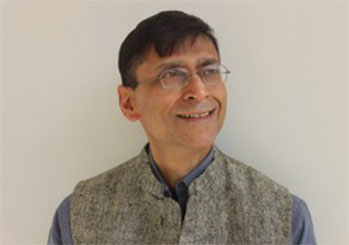
Prof. Makarand Paranjape
Makarand R Paranjape is currently Director of Education, Access Health Care Physicians, Spring Hill, Florida. Professor of English at Jawaharlal Nehru University for nearly 25 years, he also served as Director, Indian Institute of Advanced Study (Shimla) and held several fellowships/visiting professorships including the inaugural India Chair at the South Asian Studies Programme, National University of Singapore, the Shivadasani Fellowship, Oxford Centre for Hindu Studies, the CAPES Visiting Professorship at the University of São Paulo and Federal University of Minas Gerais, and the inaugural Erich Auerbach Visiting Chair in World Literature at the University of Tuebingen. The author/editor of over 50 books, he has published over 200 academic papers/book chapters, and over a thousand newspaper/periodical essays and op-eds. His ongoing columns include “Soft Power” (Open magazine), “Right Turn” (Gulf News), “Truth or Dare” (ToI Plus), and “US Sutra” (FirstPost). His latest books include Mahatma Gandhi: Mrityu aur Punarutthan (Penguin Swadesh), Identity’s Last Secret (BluOne Ink), and Swami Vivekananda: Hinduism and India’s Road to Modernity (HarperCollins).
Media Center
Press Release
FOR IMMEDIATE RELEASE:
Press Contact:
Indo-American Arts Council
info@iaac.us | iaac.us
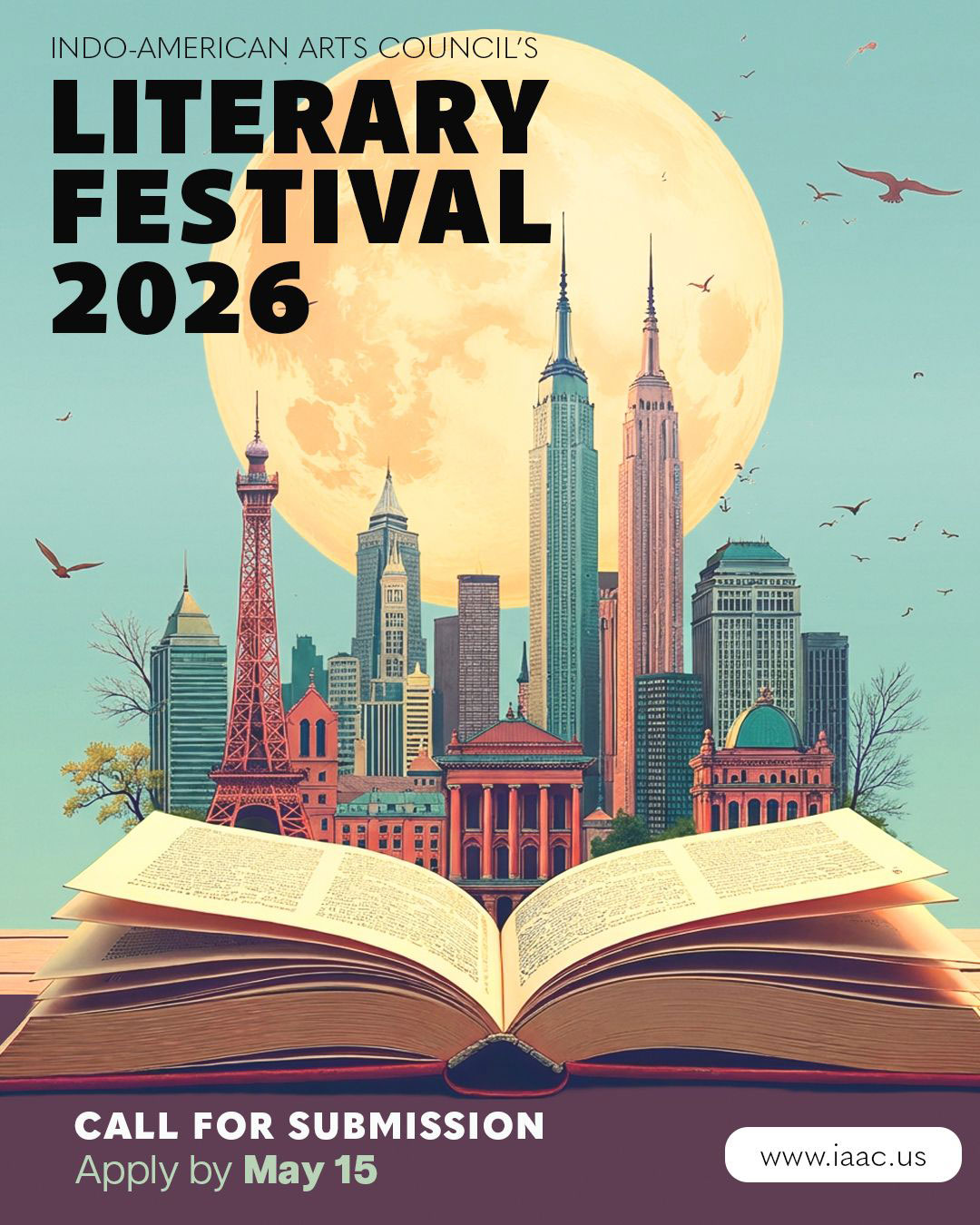
Experience the power of storytelling at the 2026 IAAC Literary Festival, coming to New York City in November. This distinguished celebration of the written word spotlights the vibrant cultures of India and its diaspora, offering a platform for stories that inspire, challenge, and connect.
We invite submissions of published books across a wide range of genres, including poetry. For the 2026 edition, the festival program will focus on adult and general literature. While children’s literature will not be featured this year, IAAC deeply values this vital genre and is actively exploring a dedicated, standalone initiative to support and showcase authors writing for young readers. We welcome submissions from Indian and diaspora authors, as well as from individuals of all backgrounds whose works draw inspiration from or are deeply rooted in India’s rich cultural heritage. Original content in English and Indian languages (with English translations) is encouraged.
Our festival has hosted luminaries such as Nobel Laureates Dr. Amartya Sen and Dr. Kailash Satyarthi, Minister of External Affairs of India Dr. S. Jaishankar, India’s foremost spiritual leader Sadhguru, International Booker Prize winning translator Daisy Rockwell, Booker Prize Nominee Avni Doshi, Padma Shri Subash Kak, Padma Shri Sunita Kohli, New York Times bestselling novelist Alka Joshi, bestselling mythologist Devdutt Pattanaik, Royal Society of Literature Fellow Meena Kandasamy, award winning chef-author Asma Khan, and Andrew Carnegie Medal winner Megha Majumdar alongside powerful voices in literature and thought. It is a space where literary excellence meets cultural depth, and ideas transcend borders.
IAAC champions themes such as Empowerment, Sustainability, and Inclusivity, forging partnerships with leading organizations like the Asian American Writers’ Workshop, Poets & Writers, and Kundiman. This is more than a festival – it’s a movement to elevate stories that matter.
We welcome your submissions and look forward to celebrating the transformative power of words. Join us in creating a legacy of literature that bridges worlds and celebrates humanity.
Here is information on some of our past festivals:
- https://iaac.us/iaac-literary-festival-2025/
- https://iaac.us/iaac-literary-festival-2024/
- https://iaac.us/iaac-literary-festival-2023/
- https://iaac.us/iaac-literary-festival-2022/
- https://iaac.us/iaac-literary-festival-2021/
- https://iaac.us/iaac-literary-festival-2020/
- https://iaac.us/iaac-literary-festival/
IAAC believes in supporting the artistic community. We have expanded our support for artists generally and authors specifically.
IAAC will:
- Pay an author honorarium.
- Pay a moderator honorarium.
- Include a link to the book’s purchase page. Please refer to the FAQs for more details on book sales.
Important: For international invitees, a valid U.S. visa is required. Please note that IAAC is unable to assist with visa processing; however, where appropriate, we can provide official supporting documentation for selected participants.
About the Indo-American Arts Council:
The Indo-American Arts Council is a not-for-profit arts organization passionately dedicated to promoting, showcasing, and building an awareness of the arts and artists whose heritage lies in the Indian subcontinent in the performing arts, visual arts, literary arts, and folk arts. IAAC supports all the artistic disciplines in classical, fusion, folk, and innovative forms influenced by the arts of India. They work cooperatively with colleagues around the United States to broaden collective audiences and create a network for shared information, resources, and funding. IAAC’s focus is to help artists and art organizations in North America as well as to facilitate artists from India to exhibit, perform, and produce their work in the United States. www.iaac.us